How to Find Multifamily Deals: Insights from Gino Barbaro

In a recent video, Gino Barbaro, co-founder of Jake & Gino, shares valuable advice on how to find multifamily deals in today’s shifting market.

Commercial vs. Residential Deal Flow

Barbaro emphasizes that finding deals in multifamily real estate differs significantly from the residential market. Commercial deals, particularly those involving 10 units or more, are primarily broker-driven. Building relationships with brokers is crucial to gaining access to these opportunities.

Utilizing Platforms like CXI

While establishing connections with brokers is key, Barbaro also highlights the importance of leveraging platforms like CXI. These platforms provide valuable data and market research tools, empowering investors to engage with brokers confidently and knowledgeably.

Understanding Financing

Another crucial difference between commercial and single-family real estate lies in financing. Commercial loans typically have terms and may include balloon payments or adjustable interest rates.

Actionable Steps

Barbaro provides specific actions you can take to start finding multifamily deals:

  • Connect with brokers: Google multifamily brokers in your target market, join their lists, and actively communicate with them.
  • Utilize CXI: Access listings, offering memorandums, and market data on the CXI platform.
  • Build relationships: Network with other investors and attend industry events.
  • Read “How to Win Friends and Influence People”: Apply Dale Carnegie’s principles to cultivate strong relationships with brokers.

Multifamily Investing: A Team Sport

Barbaro concludes by emphasizing that multifamily investing is a team sport. Building a strong team and leveraging the expertise of others is essential for success in this field.

Remember, the key to finding deals in multifamily real estate lies in building relationships, utilizing available resources, and understanding the unique aspects of this market. By following Barbaro’s advice and taking proactive steps, you can position yourself for success in the multifamily investment landscape.

Note: This article is based on the transcript of Gino Barbaro’s video “How to Find Deals in Multifamily” available on YouTube.

How To Avoid Syndication Mistakes

In this podcast, Gino Barbaro, co-founder of Jake and Gino, shares two mistakes that passive investors and sponsors make.

The first mistake passive investors make is not having a return of capital clause in the deal or having one that doesn’t return all of their money. This means that the passive investor may not get all of their money back before the general partners take any profit.

The second mistake passive investors make is not asking about fees. Gino suggests that a reasonable acquisition fee is 3% of the purchase price. He also recommends that passive investors push back on any fees that seem high.

Watch video version:

The first mistake sponsors make is not having a well-defined business plan. The business plan should explain what the sponsor plans to do with the property and how they will achieve their goals.

The second mistake sponsors make is not having a team with experience in running real estate. The team should include people with experience in property management, asset management, and legal matters. Gino recommends that passive investors ask for a list of the team members and their experience.

In conclusion, Gino recommends that passive investors be careful about the deals they invest in and that they do their homework on the sponsors. He also suggests that sponsors should have a well-defined business plan and a team with experience in running real estate.

Passive Investor Pro: Learn How To Create Passive Income in Real Estate [Passive Investor Pro Series]

Tired of the headaches associated with traditional real estate investing? This article introduces you to the concept of passive real estate investing, a strategy that allows you to reap the benefits of real estate ownership without the day-to-day hassle of managing properties.

The video, presented by Gino Barbaro of Jake and Gino, a community focused on multifamily investing, highlights the challenges faced by many passive investors during the previous market cycle.

These included:

  • Floating-rate debt: This type of debt can lead to unpredictable interest rate fluctuations, impacting your investment returns.
  • Poor operator selection: Choosing the wrong sponsor to manage your investment can significantly impact its performance.
  • Capital calls: Unexpected requests for additional funds from the investment sponsor can strain your financial resources.
  • Foreclosures: In a downturned market, properties can face foreclosure, resulting in a potential loss of your investment.

The Solution: Educated Investing

Jake and Gino offer “Passive Investor Pro” a course designed to empower you to become a “professional passive investor.” This course leverages their “Buy Right, Manage Right, Finance Right” framework to equip you with the knowledge and skills to:

  • Analyze deals like a pro: Learn to decipher complex investment terms and confidently evaluate potential opportunities.
  • Become an expert on sponsor selection: Develop the ability to identify high-performing operators who will manage your investment wisely.
  • Assemble your dream team: Connect with essential advisors such as CPAs, securities attorneys, and asset protection specialists to safeguard your investment.

Investing with Confidence

One of the key benefits highlighted by Jake and Gino is their commitment to educating investors without pressuring them to invest their money directly with them. Their focus is on empowering you to make informed decisions and build a secure financial future through passive real estate investing.

Ready to take control? The graphic below includes a link to schedule a call with the Jake and Gino team to learn more about their course and how it can help you become a successful passive real estate investor. Learn more:

passive investor pro

The Performance Paradox: How to Develop the Growth Mindset and Unleash Your Potential

Have you ever felt stuck in a rut? You work hard, you know your stuff, but progress feels frustratingly slow. This experience is common, but what if the answer lies not in working harder, but in working differently? Enter the concept of the Learning Zone, a powerful framework for growth that can be applied to any field, from mastering a new skill to excelling in your career.

The Growth Mindset Advantage

The foundation of the Learning Zone is the concept of a growth mindset. This belief system posits that our abilities are not fixed, but can be developed through effort and learning. People with a growth mindset are more likely to see challenges as opportunities, embrace feedback, and persist in the face of setbacks.

Stepping Out of the Performance Zone

We often spend our days in the Performance Zone, focused on tasks we already know how to do well. This is essential for getting things done, but it doesn’t lead to significant improvement. The Learning Zone, on the other hand, is a dedicated space for stepping outside our comfort zones and actively working to improve. It involves:

  • Deliberate Practice: This goes beyond simply repeating a task. It involves focused effort on specific areas for improvement, often with the guidance of a coach or mentor.
  • Seeking Feedback: Our perception of our performance isn’t always accurate. Feedback from trusted sources helps us identify areas for growth and adjust our approach.
  • Effective Strategies: Not all learning methods are created equal. Understanding what works best for a particular skill is crucial for efficient improvement.

Putting the Learning Zone into Action

So how can you leverage the Learning Zone in your own life? Here are some practical tips:

  • Identify Your Learning Goals: What skill do you want to develop? Be specific and measurable.
  • Embrace Feedback: Actively seek out feedback from mentors, colleagues, or even clients.
  • Find a Learning Buddy: Partnering with someone on a similar learning journey can provide support and motivation.
  • Break Down Challenges: Large goals can feel overwhelming. Chunk them down into smaller, more manageable steps.
  • Celebrate Progress: Focus on how far you’ve come, not just how far you have to go.

Learning Organizations: A Culture of Growth

The Learning Zone isn’t just for individuals. Organizations that foster a culture of continuous learning can reap significant benefits. Here’s how leaders can create a learning environment:

  • Lead by Example: Leaders who actively learn and experiment set the tone for the organization.
  • Provide Learning Opportunities: Offer workshops, coaching programs, and resources to help employees develop new skills.
  • Encourage Feedback Exchange: Create a safe space for open communication and constructive criticism.
  • Focus on Progress, Not Perfection: Recognize and reward effort and growth, not just achieving perfect results.

By embracing the Learning Zone, both individuals and organizations can unlock their full potential. Remember, the journey of improvement is never-ending, but with the right mindset and strategies, you can continuously learn, grow, and achieve your goals.

What Questions Does a Limited Partner Need To Ask A General Partner

The world of real estate investing can be alluring, promising lucrative returns and a chance to build wealth. But for many, navigating this complex landscape can be daunting. This is especially true for Limited Partners (LPs), who contribute capital to ventures managed by General Partners (GPs). While GPs hold the expertise, LPs have a crucial role to play: asking the right questions to ensure a wise investment.

Understanding the Limited Partner Role

Limited partners are passive investors. They contribute capital to a real estate project but don’t actively participate in its day-to-day management. This role comes with the benefit of less responsibility, but it also necessitates a strong reliance on the General Partner’s expertise and decision-making.

The Power of Questions for LPs

To make informed investment decisions and protect their capital, LPs must actively engage with the General Partner. Asking the right questions allows them to assess the viability of a potential deal and fosters a more transparent investment process.

Key Questions for LPs to Ask GPs

Before committing to a real estate investment, LPs should ask the GP a series of critical questions:

  • Financial Performance: This is a foundational area of inquiry. LPs should request historical financial data, specifically the trailing twelve months (T-12s), alongside rent rolls. Analyzing these documents allows LPs to compare past performance with the GP’s projections and identify any discrepancies.

  • Market Analysis: A sound understanding of the local market is vital. LPs should inquire about the GP’s methodology for determining market rent. Going beyond the GP’s claims, LPs can conduct independent research on similar properties using online resources like apartments.com to verify rent comparables. Additionally, understanding the property’s current occupancy rate (both physical and economic) and the GP’s plan to achieve optimal levels is crucial.

  • Operating Expenses (Opex): Underestimating operating expenses can significantly impact profitability. LPs should request a detailed breakdown of all Opex categories. Furthermore, comparing these costs with the market average helps LPs assess the GP’s budgeting accuracy.

  • Debt Service: The way a project is financed has a major bearing on its success. LPs should inquire about the debt structure, specifically whether it’s fixed-rate or variable-rate financing, and the loan term. Understanding these aspects helps LPs grasp potential risks and time constraints. The article emphasizes the importance of long-term debt financing over short-term bridge loans, which can create undue pressure during project execution.

Benefits of Asking Questions

By actively engaging with the GP through questions, LPs reap several benefits:

  • Informed Investment Decisions: A thorough evaluation through questioning empowers LPs to make well-informed choices about their investments.
  • Improved Risk Management: Asking questions allows LPs to identify and mitigate potential risks associated with the investment.
  • Stronger Relationships: Open communication fosters trust and a more collaborative relationship between LPs and GPs.

Conclusion

The real estate market offers exciting investment opportunities. By taking an active role and asking insightful questions, Limited Partners can navigate this landscape with confidence. This empowers them to make sound investment decisions and build wealth alongside experienced General Partners. Remember, in the world of real estate investing, knowledge is indeed power, and for LPs, the key to unlocking that power lies in asking the right questions.

The Art of Influence: How Stories Shape Decisions in Business

In the ever-competitive world of business, the ability to influence is a superpower. It’s the art of guiding people towards actions that benefit both them and your goals. But influence isn’t about manipulation or coercion. It’s about understanding how people think and leveraging that knowledge to create positive change.

This article dives into the power of influence and storytelling, exploring how they can be harnessed to achieve success in business endeavors.

Beyond Logic: The Emotional Core of Decision-Making

While facts and figures hold weight, human decisions are often driven by emotions and narratives. Take, for instance, the age-old debate of logic versus emotion. Imagine you’re presented with two investment opportunities. One boasts a statistically sound return on investment, laid out in a dry, data-heavy presentation. The other tells the story of a passionate entrepreneur creating a product that will revolutionize an industry. While the statistics might seem compelling, the emotional connection formed through the story can be a powerful motivator.

This is where storytelling comes in. Stories have the unique ability to tap into our emotions, creating empathy, trust, and connection. By weaving a compelling narrative, you can paint a picture of the future – a future where your product or service solves a problem, fulfills a need, or creates a desired outcome for your audience.

The Science Behind the Story

Neuroscience backs the power of storytelling. When we listen to stories, our brains become active participants. We imagine ourselves in the narrative, experiencing the emotions of the characters. This creates a sense of shared experience, fostering a connection with the storyteller and their message.

Studies have shown that stories can trigger the release of dopamine, a neurotransmitter associated with pleasure and reward. This positive reinforcement makes us more receptive to the information being presented. Stories can also bypass our critical thinking filters, allowing the message to resonate on a deeper level.

The Right Tool for the Job: Choosing Your Influence Strategy

While storytelling is a powerful tool, it’s not a one-size-fits-all solution. The most effective influence strategy depends on the specific situation and audience. Consider these factors when choosing your approach:

  • The Context: Are you in a high-pressure environment like a budget meeting? Here, facts and figures might take precedence. However, if you’re pitching to investors, a compelling story about your company’s vision can be instrumental.
  • The Audience: Who are you trying to influence? Understanding their needs, values, and decision-making processes will help tailor your message.

Remember: Your influence toolbox holds a variety of tools beyond storytelling. Framing, statistics, metaphors, and even props can all be effective depending on the situation.

Putting Influence into Action: The Art of the Elevator Pitch

Let’s look at a practical example: the elevator pitch. This concise presentation, designed to capture attention in a short timeframe, is a prime opportunity to leverage influence.

Here’s how storytelling can elevate your elevator pitch:

  • Start with a relatable problem: Identify a challenge your target audience faces and use it as the opening hook.
  • Introduce your solution: Explain how your product or service addresses that problem in a clear and concise way.
  • Weave in a story snippet: Share a brief anecdote that showcases the positive impact of your solution. This could be a customer success story or a personal experience that highlights the value you offer.
  • End with a call to action: Clearly state your desired outcome, whether it’s a follow-up meeting or an invitation to learn more.

By incorporating storytelling and understanding the power of influence, you can craft an elevator pitch that resonates with your audience and leaves a lasting impression.

Influence for Good: Building Trust and Transparency

In the business world, trust is paramount. By using influence ethically and transparently, you can build stronger relationships with clients, partners, and investors.

Here are some key principles to remember:

  • Focus on win-win scenarios: Influence should benefit everyone involved.
  • Be upfront and honest: Don’t resort to manipulation or misleading information.
  • Empower informed decisions: Provide all the necessary details to allow people to make well-informed choices.

By fostering trust and transparency, you create a foundation for long-term success built on genuine connections and positive outcomes.

In Conclusion

Influence is a powerful tool that can be used to shape decisions, drive positive change, and achieve success in business. By understanding the emotional core of decision-making and the power of storytelling, you can craft compelling narratives that connect with your audience and influence their actions. Remember, influence is most effective when used ethically and transparently, building trust and fostering long-term relationships. So, hone your storytelling

How to Save Money on Taxes as a Business Owner

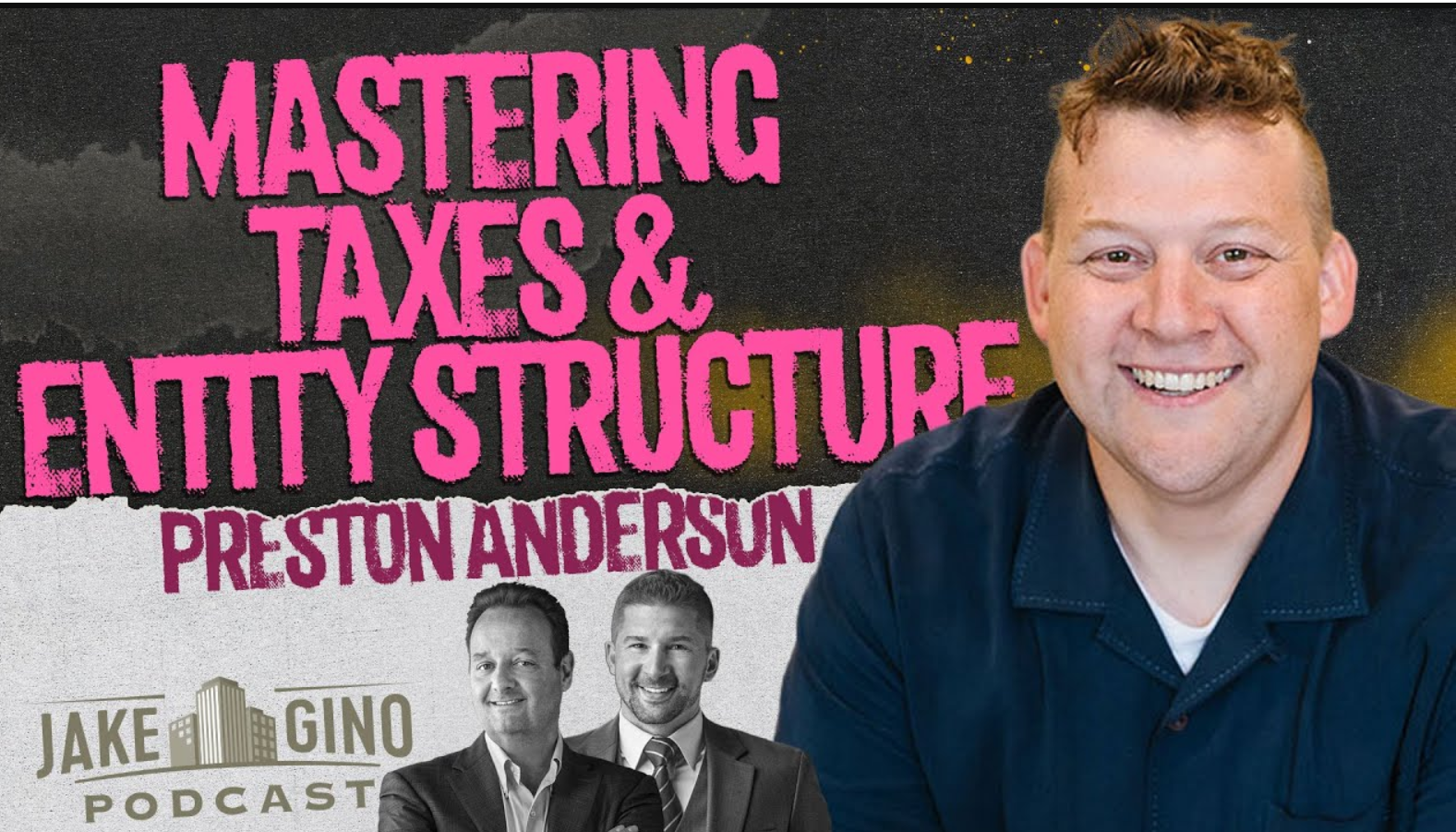
Taxes are a major expense for any business owner. But there are ways to reduce your tax burden and keep more of your hard-earned money. In this article, we’ll discuss some of the strategies that Preston Anderson, a CPA, uses to help his clients save money on taxes.

Entity Structure

The way you structure your business can have a big impact on your taxes. Preston recommends that business owners carefully consider their entity structure. Here are some options to consider:

  • Sole Proprietorship: This is the simplest business structure, but it also offers the least liability protection. The business owner is personally liable for all business debts and obligations.
  • Limited Liability Company (LLC): LLCs offer personal liability protection for the business owner. This means that your personal assets are protected from business debts. LLCs can also be taxed as pass-through entities, which means that the business itself does not pay taxes. The profits and losses of the business pass through to the owner’s personal tax return.
  • S Corporation: S corporations can offer some tax advantages over LLCs. For example, S corporations can pay owners a reasonable salary, which can help to reduce payroll taxes. However, S corporations are subject to more complex regulations than LLCs.

Hiring Family Members

If you have children who are old enough to work, you can hire them to help with your business. This can be a great way to save money on taxes. You can pay your children up to a certain amount per year without having to withhold any taxes. The exact amount you can pay your children will depend on their age and the type of work they are doing.

Retirement Plans

One of the best ways to save money on taxes is to contribute to a retirement plan. There are a variety of retirement plans available for business owners, including SEP IRAs, SIMPLE IRAs, and solo 401(k)s. Contributions to these plans are tax-deductible, and the earnings on the money in the plan grow tax-free until you withdraw it in retirement.

Record Keeping

It’s important to keep good records of your business income and expenses. This will help you to ensure that you are taking advantage of all the tax deductions and credits that you are entitled to. It will also make it easier to file your tax return and avoid any potential audits.

Tax Mistakes to Avoid

  • Not Filing Your Taxes: This is the biggest mistake you can make. Even if you think you owe taxes, you should still file your return. The IRS will penalize you for not filing, and the penalties can be significant.
  • Filing on Schedule C: If you are a business owner, you should not file your business income and expenses on Schedule C of your personal tax return. Schedule C is for sole proprietors who have no employees. If you have employees, you should file Form 1120 (for C corporations) or Form 1120S (for S corporations).

By following these tips, you can save money on taxes and keep more of your profits. However, it’s important to note that this article is for informational purposes only and should not be considered tax advice. You should always consult with a tax professional to discuss your specific tax situation.

From Engineer to Mindset Coach: Vamsi Polimetla Makes More Leaders

Vamsi Polimetla, founder and CEO of Make More Leaders, isn’t your typical executive coach. In a recent interview on the Jake and Gino podcast,  delved into his journey from unfulfilled engineer to purpose-driven coach, emphasizing the power of gratitude, personal growth, and strong relationships.

A Shift in Perspective

Born in India, Vamsi  arrived in the US with ambitious dreams. Despite academic challenges, he carved a successful 20-year career in computer science. Yet, a yearning for personal fulfillment gnawed at him. This yearning sparked a continuous investment in personal development, fueled by mentors like Dan Sullivan and Benjamin Hardy. Vamsi  embraced a “gain mentality,” focusing on appreciating his existing blessings rather than chasing what he lacked.

The Power of Gratitude

The conversation delved deeply into the concept of gratitude. Vamsi  suggests cultivating appreciation by contrasting your current situation with your past. He shared a poignant experience visiting a slum in Mumbai, a stark reminder that true happiness doesn’t always reside in material possessions. Interestingly, the concept of connection emerged as a key factor in fostering gratitude. Vamsi  highlighted the positive shift in his perspective after connecting with the podcast hosts just before recording.

This theme resonated with Gino, who recounted his own experience in Aruba. Witnessing a simpler lifestyle sparked feelings of gratitude for the opportunities he enjoyed back in the US. Vamsi  further emphasized this point by recalling a visit to a wealthy area in South Florida, followed by a visit to a Mumbai slum. He observed that true happiness might not be tied to material wealth but to a sense of contentment and connection.

Relationships Over Riches

Vamsi ‘s core message is clear: striving for relationships and connections is more rewarding than chasing a high bank account. These connections ultimately contribute to creating wealth and a fulfilling life. He opened up about his decision to leave the corporate world, where he witnessed a lack of joy among executives. Inspired by Tony Robbins’ infectious energy during the “Unleash the Power Within” event, Vamsi  felt a calling to pursue a different path, a path dedicated to helping others find fulfillment.

Facing Challenges and Finding Support

Leaving a stable job with benefits wasn’t easy. Cultural pressures within his Indian family favored traditional career paths. Vamsi  strategically tested the waters by starting his coaching business part-time before taking the leap. However, just before his planned departure, his wife received a cancer diagnosis. Despite this setback, they remained determined. Vamsi  took a leave of absence to support his wife and ultimately resigned to pursue his coaching career full-time.

Overcoming Objections

Vamsi ‘s decision wasn’t met with universal support. His parents and former colleagues questioned his stability, highlighting the loss of his health insurance. However, his wife’s unwavering encouragement fueled his confidence. Vamsi  emphasizes the power of spousal support, a sentiment echoed by many successful entrepreneurs.

Finding Clarity and Building a Business

Vamsi  credits his mentors and personal development journey for helping him gain clarity about his goals. He highlights the importance of taking that first step to gain perspective. Building a successful coaching business wasn’t a linear path. Initially, Vamsi  offered a broad range of services, but with the help of mentors like Taki Moore, he honed his focus and expanded to group coaching.

The Value of Mentorship

The influence of mentors like Tony Robbins, Lou House, and Brandon Burchard is undeniable in Vamsi ‘s success story. He met Brandon at a Tony Robbins event, and together they co-founded Master Talk, a communication training company. This partnership underscores the importance of communication skills, a skill Vamsi  actively developed after a disastrous presentation early in his career.

The Takeaway

Vamsi  Paul’s story offers valuable insights for anyone seeking a more fulfilling life. By prioritizing personal growth, cultivating gratitude, and building strong relationships, we can unlock our potential and achieve our goals. Vamsi ‘s journey is a testament to the power of taking action, embracing challenges, and investing in ourselves and those around us.


Cracking the Code to Capital Raising: A Review of Sal Buscemi’s “Calling the Capital: 20 Ways to Incorporate Urgency Into Your Capital Raise”

In the ever-evolving world of real estate, raising capital can be a significant hurdle for aspiring investors. Sal Buscemi, a seasoned investment banker with over $300 million raised for real estate deals, offers a comprehensive roadmap in his book “Calling the Capital: 20 Ways to Incorporate Urgency Into Your Capital Raise .” This book review dives into the key takeaways and practical strategies outlined by Buscemi to help you unlock the potential of self-directed IRAs and navigate the world of raising capital for real estate ventures.

We had the honor and privilege of interviewing Sal on the Jake & Gino show, and his depth of knowledge and experience was refreshing and inspiring! Here are several key takeaways from Sal’s book.

Key Steps to Capital Raising:

Buscemi presents a structured approach, dubbed “The Roach Motel Concept,” to attract and secure investor capital. This six-step blueprint emphasizes:

  1. Micro Commitments: Securing initial, smaller commitments from potential investors builds trust and momentum before diving into larger sums.
  2. Self-Directed IRAs: Leveraging the power of self-directed IRAs allows investors to invest in real estate using their retirement funds, offering tax advantages and flexibility.
  3. Compelling Communication: Crafting a clear and engaging video and tear sheet presentation effectively communicates the deal’s potential and attracts investor interest.
  4. Tranche the Deal: Dividing the investment into smaller tranches allows for phased fundraising, enabling you to raise capital as needed throughout the project.
  5. Persistent Follow-Up: Regular phone calls and texts demonstrate your dedication and keep investors informed, fostering trust and commitment.
  6. Gratitude is Key: Expressing sincere appreciation to investors after the deal closes strengthens relationships and lays the foundation for future collaborations. 

Beyond the Blueprint:

The book delves deeper, providing valuable insights into:

  • Investor Identification: Strategies for finding and connecting with potential investors who align with your investment goals.
  • Negotiation Tips: Practical advice on navigating negotiations with investors to secure mutually beneficial terms.
  • Closing the Deal: Essential steps and considerations to ensure a smooth and successful closing process. 

Takeaways for Real Estate Investors:

“Calling the Capital: 20 Ways to Incorporate Urgency Into Your Capital Raise ” offers a wealth of practical knowledge for anyone seeking to raise capital for real estate investments. The book’s key takeaways highlight the importance of:

  • Utilizing self-directed IRAs as a powerful tool for attracting investment.
  • Securing initial micro commitments to build trust and momentum.
  • Crafting a compelling narrative to showcase your deal’s potential.
  • Implementing a phased fundraising approach through tranching.
  • Maintaining persistent communication and follow-up with investors.
  • Expressing genuine gratitude to your investors for their trust and support. 

Conclusion:

“Calling the Capital: 20 Ways to Incorporate Urgency Into Your Capital Raise ” serves as a valuable resource for real estate investors seeking to unlock the door to capital. By incorporating Buscemi’s structured approach and practical insights, you can navigate the fundraising landscape with confidence and increase your chances of success in your real estate ventures.

Whether you’re raising money for your first deal, or partnering with savvy investors, Sal’s book is an invaluable resource to securing the capital needed to close the deal.

To learn more about Sal, visit Brahmin Partners & Salvatore Buscemi

To buy Sal’s Book, click HERE!


The Difference Between The Poor, MIddle Class & Wealthy Mindset

The Three Financial Mindsets: Stepping Up Your Financial Game

Financial freedom – the ability to live comfortably without relying on a traditional job – is a dream for many. But achieving it requires a specific mindset, a way of thinking about and managing your money. This article explores the three main financial mindsets: poor, middle class, and wealthy, and how they impact your financial journey.

The Poor Mindset:

People with a poor mindset often struggle to make ends meet. They might live paycheck to paycheck, prioritizing immediate needs over long-term planning. Here are some characteristics:

  • Focus on transactions: Income is seen solely for immediate needs, with little to no thought about saving or investing.
  • Instant gratification: There’s a tendency to spend money as soon as it’s earned, with little regard for future goals.
  • Debt dependence: Debt is seen as a solution to cover expenses, creating a cycle of high-interest payments.

The Middle-Class Mindset:

The middle class often prioritizes stability and security. They might save for retirement or emergencies, but their focus is often on earning a steady income. Here are some characteristics:

  • Savings focus: Saving for specific events like retirement or college is prioritized.
  • Traditional investments: Investments like mutual funds or stocks are used, but may not be strategically focused on generating passive income.
  • Limited risk-taking: Aversion to risk can lead to missing out on potentially high-growth investment opportunities.

The Wealthy Mindset:

The wealthy mindset focuses on building wealth and achieving financial freedom. Here are some characteristics:

  • Long-term vision: Wealth is built over time through strategic planning and goal setting.
  • Passive income focus: Investments are chosen to generate income that requires minimal ongoing effort. This could include real estate, dividend-paying stocks, or businesses with established systems.
  • Calculated risks: Calculated risks are taken to pursue opportunities for high growth, while also considering strategies to mitigate potential losses.
  • Continuous learning: Wealthy individuals actively seek knowledge and education to improve their financial literacy and decision-making.
  • Relationships: Building strong relationships with mentors and other successful individuals can provide valuable insights and opportunities.

Shifting Your Mindset

The good news is that your financial mindset is not set in stone. By adopting some of the characteristics of the wealthy mindset, you can take control of your finances and move towards your financial goals. Here are some tips:

  • Set clear financial goals: Knowing what you’re working towards will help you make informed financial decisions.
  • Develop a budget: Track your income and expenses to identify areas where you can save.
  • Prioritize saving and investing: Make saving a habit and invest your savings to grow your wealth over time.
  • Educate yourself: Learn about different investment options and strategies to make informed decisions.
  • Seek guidance: Consider working with a financial advisor to develop a personalized financial plan.

Remember, financial freedom is a journey, not a destination. By adopting the right mindset and taking consistent action, you can build a secure financial future and achieve your financial goals.