Quit Your Job by Creating A Plan to Invest In Multifamily Real Estate

[et_pb_section bb_built=”1″ inner_width=”auto” inner_max_width=”1920px”][et_pb_row][et_pb_column type=”4_4″ custom_padding__hover=”|||” custom_padding=”|||”][et_pb_text _builder_version=”4.20.2″ background_pattern_color=”rgba(0,0,0,0.2)” background_mask_color=”#ffffff” text_text_shadow_horizontal_length=”text_text_shadow_style,%91object Object%93″ text_text_shadow_horizontal_length_tablet=”0px” text_text_shadow_vertical_length=”text_text_shadow_style,%91object Object%93″ text_text_shadow_vertical_length_tablet=”0px” text_text_shadow_blur_strength=”text_text_shadow_style,%91object Object%93″ text_text_shadow_blur_strength_tablet=”1px” link_text_shadow_horizontal_length=”link_text_shadow_style,%91object Object%93″ link_text_shadow_horizontal_length_tablet=”0px” link_text_shadow_vertical_length=”link_text_shadow_style,%91object Object%93″ link_text_shadow_vertical_length_tablet=”0px” link_text_shadow_blur_strength=”link_text_shadow_style,%91object Object%93″ link_text_shadow_blur_strength_tablet=”1px” ul_text_shadow_horizontal_length=”ul_text_shadow_style,%91object Object%93″ ul_text_shadow_horizontal_length_tablet=”0px” ul_text_shadow_vertical_length=”ul_text_shadow_style,%91object Object%93″ ul_text_shadow_vertical_length_tablet=”0px” ul_text_shadow_blur_strength=”ul_text_shadow_style,%91object Object%93″ ul_text_shadow_blur_strength_tablet=”1px” ol_text_shadow_horizontal_length=”ol_text_shadow_style,%91object Object%93″ ol_text_shadow_horizontal_length_tablet=”0px” ol_text_shadow_vertical_length=”ol_text_shadow_style,%91object Object%93″ ol_text_shadow_vertical_length_tablet=”0px” ol_text_shadow_blur_strength=”ol_text_shadow_style,%91object Object%93″ ol_text_shadow_blur_strength_tablet=”1px” quote_text_shadow_horizontal_length=”quote_text_shadow_style,%91object Object%93″ quote_text_shadow_horizontal_length_tablet=”0px” quote_text_shadow_vertical_length=”quote_text_shadow_style,%91object Object%93″ quote_text_shadow_vertical_length_tablet=”0px” quote_text_shadow_blur_strength=”quote_text_shadow_style,%91object Object%93″ quote_text_shadow_blur_strength_tablet=”1px” header_text_shadow_horizontal_length=”header_text_shadow_style,%91object Object%93″ header_text_shadow_horizontal_length_tablet=”0px” header_text_shadow_vertical_length=”header_text_shadow_style,%91object Object%93″ header_text_shadow_vertical_length_tablet=”0px” header_text_shadow_blur_strength=”header_text_shadow_style,%91object Object%93″ header_text_shadow_blur_strength_tablet=”1px” header_2_text_shadow_horizontal_length=”header_2_text_shadow_style,%91object Object%93″ header_2_text_shadow_horizontal_length_tablet=”0px” header_2_text_shadow_vertical_length=”header_2_text_shadow_style,%91object Object%93″ header_2_text_shadow_vertical_length_tablet=”0px” header_2_text_shadow_blur_strength=”header_2_text_shadow_style,%91object Object%93″ header_2_text_shadow_blur_strength_tablet=”1px” header_3_text_shadow_horizontal_length=”header_3_text_shadow_style,%91object Object%93″ header_3_text_shadow_horizontal_length_tablet=”0px” header_3_text_shadow_vertical_length=”header_3_text_shadow_style,%91object Object%93″ header_3_text_shadow_vertical_length_tablet=”0px” header_3_text_shadow_blur_strength=”header_3_text_shadow_style,%91object Object%93″ header_3_text_shadow_blur_strength_tablet=”1px” header_4_text_shadow_horizontal_length=”header_4_text_shadow_style,%91object Object%93″ header_4_text_shadow_horizontal_length_tablet=”0px” header_4_text_shadow_vertical_length=”header_4_text_shadow_style,%91object Object%93″ header_4_text_shadow_vertical_length_tablet=”0px” header_4_text_shadow_blur_strength=”header_4_text_shadow_style,%91object Object%93″ header_4_text_shadow_blur_strength_tablet=”1px” header_5_text_shadow_horizontal_length=”header_5_text_shadow_style,%91object Object%93″ header_5_text_shadow_horizontal_length_tablet=”0px” header_5_text_shadow_vertical_length=”header_5_text_shadow_style,%91object Object%93″ header_5_text_shadow_vertical_length_tablet=”0px” header_5_text_shadow_blur_strength=”header_5_text_shadow_style,%91object Object%93″ header_5_text_shadow_blur_strength_tablet=”1px” header_6_text_shadow_horizontal_length=”header_6_text_shadow_style,%91object Object%93″ header_6_text_shadow_horizontal_length_tablet=”0px” header_6_text_shadow_vertical_length=”header_6_text_shadow_style,%91object Object%93″ header_6_text_shadow_vertical_length_tablet=”0px” header_6_text_shadow_blur_strength=”header_6_text_shadow_style,%91object Object%93″ header_6_text_shadow_blur_strength_tablet=”1px” box_shadow_horizontal_tablet=”0px” box_shadow_vertical_tablet=”0px” box_shadow_blur_tablet=”40px” box_shadow_spread_tablet=”0px” vertical_offset_tablet=”0″ horizontal_offset_tablet=”0″ z_index_tablet=”0″]

The year was 2011. My business was floundering and I was working just as many hours but earning less. Does that sound familiar? I finally built up enough anger and leverage to take action and dedicate myself to investing in multifamily real estate with the intention of earning enough passive income to allow me to quit my business (aka job).

1. Create enough why2. Leverage3. Thought-desire-action-result4. Education5. Network6. Meet partner/pick market7. Dive into market/analyze deals8. Patience persistence willing to walk away9. Continue education10. Focus on getting first deal done11. Close first deal12. Start hunting for the second deal13. Close second deal14. Repeat step 13 until you reach your passive income total

The journey of a thousand miles begins with the first step, but if you don’t have a strong enough reason to begin the journey, you will never start. Or, in my case, the beginning of the journey will take you in the wrong direction. When I first began investing in real estate, I did not have a strong enough “why” and I definitely lacked a plan or strategy to achieve my goal. Only when my situation at my business became dire and I created enough leverage to take action was I able to dedicate myself to the journey.

What was my thinking during the decision phase?

I wanted to get out of the rat race and reclaim my freedom of time and money. That thought became a burning desire, and this desire was followed by massive action. It is important to note that if a desire is not strong enough, than the thought will dissipate into thin air. That had already occurred to me years ago when I began my investing in real estate. I lacked that burning desire to take massive action.

Let me list a few of my actions that I deemed massive. I was already working in excess of fifty hours per week in my business, coupled with having five children at the time. I made it a habit to wake up early in the morning to educate myself on real estate, ate lunch every day at work while consuming more content and followed up in the evening with more reading. Was it overwhelming at first? Definitely!! But I had the energy, passion and focus to be able to maintain this grueling schedule. I knew that I was on the right path when I constantly heard friends and family members telling me I should take a break. Mom said it best: “Life is not all about work. You need to have some fun”. The real estate part did not feel like work to me. That’s how I knew I was on the right path.

Life is not all about work. You need to have some fun

Along with the education, it was time for me to start networking with real estate professionals. I decided to seek out a partner, and as luck would have it, my brother’s friend was moving out of the state and looking to invest in real estate. As the old saying goes, seek and ye shall find. This was another example to me that I was ready to embark on my journey.Once Jake moved to Tennessee, we began to analyze the market and network with brokers. We were impressed with the demographics, the valuations and the growth of the market. It was a stable, growing area with nice job growth and a favorable tax climate, along with a favorable stance towards landlords. To me, this appeared to be in stark contrast to my market of suburban New York.

Now came the tricky part. We had to display credibility with the brokers and other professionals we were meeting. I was fortunate to own a couple of small real estate investments, and created a Credibility Book to highlight our investment holdings and strategy.
investing in mom and pop appartmentsClick Here to download a copy of our Credibility Book.

Don’t worry if you don’t own any investment properties. You still should create a Credibility Book to outline your investment strategy and discuss why you are investing in a certain market. At this stage, your education should allow you to be able to speak the broker lingo and begin to analyze deals.

Even though we had our Credibility Book created and an abundant amount of education, we still struggled to gain any traction. In fact, Jake decided to “blow” his down payment on a house, and it appeared the end was in sight. Sometimes pleasing your wife takes precedence to investing. But, as you recall, I mentioned a couple of times how vital it is to have a strong enough why. My desire, along with Jake’s did not diminish. We just ran into a temporary stumbling block.Once Jake moved into his home, our search resumed. It took us nearly two years to land our first deal, a run down twenty-five unit multifamily property that we closed on in February of 2013. This first deal was crucial to our success, and every investor looks back at their first deal as the turning point in their investing lives.

There are a few reasons why:

First of all,we realized that we could buy a property. We finally did it! That first month’s cash flow made an indelible impression in the both of us, and we were like two kids in a candy store. It wasn’t a huge payout, yet a payout nevertheless

Secondly, this purchase began to create momentum for us. We were forced to dive into the multifamily space by having to create a team, and by managing the property and learning the business. Our focus began to shift to the business side of real estate, and we were soon hunting for another deal, even though we were low on funds.This deal was pivotal for us because we finally gained the credibility in the market. We closed our first deal, recruited a great real estate broker, located a local bank for financing and displayed the confidence that wecould repeat our success. As Henry Ford says,

Whether you think you can, or you think you can’t–you’re right.

Two months after we closed on our first deal, we located our second deal, a thirty-six unit apartment complex. The closing process went much smoother than the first deal, although there were a couple of interesting stories. If you ever speak to Jake, ask him about his Ruby Tuesday’s dinner on a Friday night with the seller who was trying to get him drunk. Fortunately, he kept his head, and we closed on the deal in July. So, within six months, we were the proud owners of 61 units.

Both of us were still working full time at our jobs, and I remember Jake telling me that one more deal and he was quitting his job. Fortunately for us, we closed on our third deal in February of 2014, a 136 unit apartment complex with a ton of potential. We recruited another partner, and we realized a vital lesson. As the deals got bigger, the work necessarily did not get harder. In fact, it was easier to close the 136 units than it was our first deal.

As you can see, your first deal is crucial. On of our podcast guests, J. Scott, the famous fix and flipper of Bigger Pockets fame, uttered a powerful statement while on the show. He told us that he never met a real estate investor with one deal. The investor would either have ZERO deals or multiple deals, reinforcing my notion of how important it is to land your first deal. J. also made another terrific point. He said that you can always find excuses for why now is not the right time. He began his flipping business back in 2008 (talk about bad timing), and he has currently flipped over two hundred homes. His reason why was just as powerful as ours.

So where do you start?

Follow our list up top, and seek out professionals and educators to help you on the path. Real estate is a team sport, and the stronger your network and team, the farther you will go. Is now the right time for you? Only you know that answer. If it is, then it’s time to become part of our community.

Jake & Gino

[/et_pb_text][/et_pb_column][/et_pb_row][/et_pb_section]

Why You Should Spend Money For Your Real Estate Education

[et_pb_section bb_built=”1″ inner_width=”auto” inner_max_width=”1920px”][et_pb_row][et_pb_column type=”4_4″ custom_padding__hover=”|||” custom_padding=”|||”][et_pb_text _builder_version=”4.20.2″ background_pattern_color=”rgba(0,0,0,0.2)” background_mask_color=”#ffffff” text_text_shadow_horizontal_length=”text_text_shadow_style,%91object Object%93″ text_text_shadow_horizontal_length_tablet=”0px” text_text_shadow_vertical_length=”text_text_shadow_style,%91object Object%93″ text_text_shadow_vertical_length_tablet=”0px” text_text_shadow_blur_strength=”text_text_shadow_style,%91object Object%93″ text_text_shadow_blur_strength_tablet=”1px” link_text_shadow_horizontal_length=”link_text_shadow_style,%91object Object%93″ link_text_shadow_horizontal_length_tablet=”0px” link_text_shadow_vertical_length=”link_text_shadow_style,%91object Object%93″ link_text_shadow_vertical_length_tablet=”0px” link_text_shadow_blur_strength=”link_text_shadow_style,%91object Object%93″ link_text_shadow_blur_strength_tablet=”1px” ul_text_shadow_horizontal_length=”ul_text_shadow_style,%91object Object%93″ ul_text_shadow_horizontal_length_tablet=”0px” ul_text_shadow_vertical_length=”ul_text_shadow_style,%91object Object%93″ ul_text_shadow_vertical_length_tablet=”0px” ul_text_shadow_blur_strength=”ul_text_shadow_style,%91object Object%93″ ul_text_shadow_blur_strength_tablet=”1px” ol_text_shadow_horizontal_length=”ol_text_shadow_style,%91object Object%93″ ol_text_shadow_horizontal_length_tablet=”0px” ol_text_shadow_vertical_length=”ol_text_shadow_style,%91object Object%93″ ol_text_shadow_vertical_length_tablet=”0px” ol_text_shadow_blur_strength=”ol_text_shadow_style,%91object Object%93″ ol_text_shadow_blur_strength_tablet=”1px” quote_text_shadow_horizontal_length=”quote_text_shadow_style,%91object Object%93″ quote_text_shadow_horizontal_length_tablet=”0px” quote_text_shadow_vertical_length=”quote_text_shadow_style,%91object Object%93″ quote_text_shadow_vertical_length_tablet=”0px” quote_text_shadow_blur_strength=”quote_text_shadow_style,%91object Object%93″ quote_text_shadow_blur_strength_tablet=”1px” header_text_shadow_horizontal_length=”header_text_shadow_style,%91object Object%93″ header_text_shadow_horizontal_length_tablet=”0px” header_text_shadow_vertical_length=”header_text_shadow_style,%91object Object%93″ header_text_shadow_vertical_length_tablet=”0px” header_text_shadow_blur_strength=”header_text_shadow_style,%91object Object%93″ header_text_shadow_blur_strength_tablet=”1px” header_2_text_shadow_horizontal_length=”header_2_text_shadow_style,%91object Object%93″ header_2_text_shadow_horizontal_length_tablet=”0px” header_2_text_shadow_vertical_length=”header_2_text_shadow_style,%91object Object%93″ header_2_text_shadow_vertical_length_tablet=”0px” header_2_text_shadow_blur_strength=”header_2_text_shadow_style,%91object Object%93″ header_2_text_shadow_blur_strength_tablet=”1px” header_3_text_shadow_horizontal_length=”header_3_text_shadow_style,%91object Object%93″ header_3_text_shadow_horizontal_length_tablet=”0px” header_3_text_shadow_vertical_length=”header_3_text_shadow_style,%91object Object%93″ header_3_text_shadow_vertical_length_tablet=”0px” header_3_text_shadow_blur_strength=”header_3_text_shadow_style,%91object Object%93″ header_3_text_shadow_blur_strength_tablet=”1px” header_4_text_shadow_horizontal_length=”header_4_text_shadow_style,%91object Object%93″ header_4_text_shadow_horizontal_length_tablet=”0px” header_4_text_shadow_vertical_length=”header_4_text_shadow_style,%91object Object%93″ header_4_text_shadow_vertical_length_tablet=”0px” header_4_text_shadow_blur_strength=”header_4_text_shadow_style,%91object Object%93″ header_4_text_shadow_blur_strength_tablet=”1px” header_5_text_shadow_horizontal_length=”header_5_text_shadow_style,%91object Object%93″ header_5_text_shadow_horizontal_length_tablet=”0px” header_5_text_shadow_vertical_length=”header_5_text_shadow_style,%91object Object%93″ header_5_text_shadow_vertical_length_tablet=”0px” header_5_text_shadow_blur_strength=”header_5_text_shadow_style,%91object Object%93″ header_5_text_shadow_blur_strength_tablet=”1px” header_6_text_shadow_horizontal_length=”header_6_text_shadow_style,%91object Object%93″ header_6_text_shadow_horizontal_length_tablet=”0px” header_6_text_shadow_vertical_length=”header_6_text_shadow_style,%91object Object%93″ header_6_text_shadow_vertical_length_tablet=”0px” header_6_text_shadow_blur_strength=”header_6_text_shadow_style,%91object Object%93″ header_6_text_shadow_blur_strength_tablet=”1px” box_shadow_horizontal_tablet=”0px” box_shadow_vertical_tablet=”0px” box_shadow_blur_tablet=”40px” box_shadow_spread_tablet=”0px” vertical_offset_tablet=”0″ horizontal_offset_tablet=”0″ z_index_tablet=”0″]

I attribute all of my success in the real estate space to receiving a thorough education through mentors, coaches and training programs. The education allowed me to shorten my learning curve dramatically, as well as saving me tons of money by avoiding needless mistakes. Life in real estate was painful before I sought the proper training. In this article, I would like to dive into why it is necessary for every novice to seek out professionals to teach them about real estate investing and how education will lead them to success quicker. I will also explore different options on what to look for when choosing what platforms or training programs a novice should consider.

I interviewed Mark Podolsky, the Land Geek on our PODCAST!, and he introduced me to a simple, yet useful model that he employs in his life. It is called the Project Management Triangle, and the triangle states that there are three properties to consider when choosing something in life: speed, cost and quality. You can only achieve two, so be sure to pick wisely. Speed relates to how quickly something can be accomplished. Quality refers to whether it is constructed well. And money reflects whether something is going to be cheap or expensive.


Project Management Triangle


We all have choices in life. We can design something quickly and with quality, but it will not be cheap. Secondly, we can design something quickly and cheaply, but the quality will be lacking. Finally, we can design something with high quality and cheaply, but it will take longer to produce. Most activities in life revolve around these three properties.

When choosing to enter a new endeavor in life, which one would you choose? When I first began investing, I chose to jump in to real estate with very little education (AKA cheap). I jumped in real quick, but the end result was that my investing was poor. I had not done my due diligence on the investments and my returns were poor because I had not learned how to invest in the multifamily space.

After my last debacle, I decided to slow down and seek out a coach and training program. Was it cheap? NO. But did it turn around my investing career and usher in a new level of success? Definitely. I would never have been able to acquire almost 800 units in four years and quit my business to focus on real estate.

I would like for you to consider evaluating these three properties very carefully if you are considering entering the multifamily space. I find it amazing that parents will spend thousands, even hundreds of thousands of dollars for their children’s college education, yet will hesitate to spend a few thousand dollars on their own education. If you want to succeed in life, the easiest path is to follow someone who has already journeyed down the path and can show you where to go. It is always easier to follow a recipe from a master baker and achieve the identical product than trying to go it alone.

Where should you begin to look for education? Jake’s first stop was a partner, namely me. It was a marriage made in Tennessee. He had the ambition, the energy, the willingness, yet lacked the education. I possessed the education and the experience, and we joined forces to begin investing in his market. He was willing to put in countless hours to learn from me, and self manage the properties for additional experience. Our combination of education and ambition has led to both of us pursuing real estate full time.

What if you are unlucky and can’t find a partner? Begin by listening to podcasts, attending REIA (Real Estate Investment Association) meetings, visiting investing sites such as Bigger Pockets, Flipnerd, Jake & Gino and Rei Club and consume as much content as possible.

My next step was to seek out investors who were selling their real estate knowledge online to students. I am a program junkie, and have purchased dozens of real estate courses and attended seminars to increase my knowledge on a particular niche in real estate. I was not only looking for knowledge, but a community to join where it would be easier to network and locate potential partners and money for my deals. The key is to surround yourself with like-minded individuals to help push you towards your goals.

Multifamily Mastery

Multifamily Mastery! 

Once you are dedicating several hours a week to your education, I would reassess your dedication to investing. If you are totally committed, the next step is to seek out a mentor or coach. This can be done a couple of different ways. If you are young and can’t afford a coach, then try to find a mentor who you can work for and learn the ropes from him. It has to be an equal and fair trade of benefits. You need to bring value to your mentor. Don’t expect a mentor to teach you without offering value back to him.

After I purchased a couple of programs, I wanted more personal training. I turned to coaching, and although it can be a costly decision, there are huge benefits. For those who like to have their hand held, this is the right option for you. A coach will hold you accountable and will develop a plan of attack to achieve your goals. A coach normally has a system for the student to follow and more importantly, has a network of professionals that the student can leverage. Most novices make the mistake in thinking that they can do everything on their own. Real estate is a team sport, and the stronger and more knowledgeable your team is, the quicker it will be to achieving your goals.

You have to make the decision. Do you want to try and pursue real estate alone, knowing that it will take much longer and costly mistakes will be made? Or do you want to spend money on your education, shortening your learning curve and avoid some of those costly mistakes while reaching your goals much quicker? I wish I had chosen the latter, but I’m still thrilled that I came to my senses and invested in myself.

Task:

Decide if real estate is the right path for you. Once the decision is made and you have enough reasons why, the answer of HOW will come to you. Next, begin to consume free information from real estate sites. Once you feel comfortable with understanding basic concepts, begin to browse for educators that focus on your specific niche. The educators need to have a proven track record, and more importantly, need to be investing in the current market. Finally, consider a coaching program to personalize your learning and help you with networking with other real estate professionals.

[/et_pb_text][/et_pb_column][/et_pb_row][/et_pb_section]

How to Influence An Outcome By Using The Three Essential Variables of Negotiation

[et_pb_section bb_built=”1″][et_pb_row][et_pb_column type=”4_4″][et_pb_text _builder_version=”4.20.2″ background_pattern_color=”rgba(0,0,0,0.2)” background_mask_color=”#ffffff” text_text_shadow_horizontal_length=”text_text_shadow_style,%91object Object%93″ text_text_shadow_horizontal_length_tablet=”0px” text_text_shadow_vertical_length=”text_text_shadow_style,%91object Object%93″ text_text_shadow_vertical_length_tablet=”0px” text_text_shadow_blur_strength=”text_text_shadow_style,%91object Object%93″ text_text_shadow_blur_strength_tablet=”1px” link_text_shadow_horizontal_length=”link_text_shadow_style,%91object Object%93″ link_text_shadow_horizontal_length_tablet=”0px” link_text_shadow_vertical_length=”link_text_shadow_style,%91object Object%93″ link_text_shadow_vertical_length_tablet=”0px” link_text_shadow_blur_strength=”link_text_shadow_style,%91object Object%93″ link_text_shadow_blur_strength_tablet=”1px” ul_text_shadow_horizontal_length=”ul_text_shadow_style,%91object Object%93″ ul_text_shadow_horizontal_length_tablet=”0px” ul_text_shadow_vertical_length=”ul_text_shadow_style,%91object Object%93″ ul_text_shadow_vertical_length_tablet=”0px” ul_text_shadow_blur_strength=”ul_text_shadow_style,%91object Object%93″ ul_text_shadow_blur_strength_tablet=”1px” ol_text_shadow_horizontal_length=”ol_text_shadow_style,%91object Object%93″ ol_text_shadow_horizontal_length_tablet=”0px” ol_text_shadow_vertical_length=”ol_text_shadow_style,%91object Object%93″ ol_text_shadow_vertical_length_tablet=”0px” ol_text_shadow_blur_strength=”ol_text_shadow_style,%91object Object%93″ ol_text_shadow_blur_strength_tablet=”1px” quote_text_shadow_horizontal_length=”quote_text_shadow_style,%91object Object%93″ quote_text_shadow_horizontal_length_tablet=”0px” quote_text_shadow_vertical_length=”quote_text_shadow_style,%91object Object%93″ quote_text_shadow_vertical_length_tablet=”0px” quote_text_shadow_blur_strength=”quote_text_shadow_style,%91object Object%93″ quote_text_shadow_blur_strength_tablet=”1px” header_text_shadow_horizontal_length=”header_text_shadow_style,%91object Object%93″ header_text_shadow_horizontal_length_tablet=”0px” header_text_shadow_vertical_length=”header_text_shadow_style,%91object Object%93″ header_text_shadow_vertical_length_tablet=”0px” header_text_shadow_blur_strength=”header_text_shadow_style,%91object Object%93″ header_text_shadow_blur_strength_tablet=”1px” header_2_text_shadow_horizontal_length=”header_2_text_shadow_style,%91object Object%93″ header_2_text_shadow_horizontal_length_tablet=”0px” header_2_text_shadow_vertical_length=”header_2_text_shadow_style,%91object Object%93″ header_2_text_shadow_vertical_length_tablet=”0px” header_2_text_shadow_blur_strength=”header_2_text_shadow_style,%91object Object%93″ header_2_text_shadow_blur_strength_tablet=”1px” header_3_text_shadow_horizontal_length=”header_3_text_shadow_style,%91object Object%93″ header_3_text_shadow_horizontal_length_tablet=”0px” header_3_text_shadow_vertical_length=”header_3_text_shadow_style,%91object Object%93″ header_3_text_shadow_vertical_length_tablet=”0px” header_3_text_shadow_blur_strength=”header_3_text_shadow_style,%91object Object%93″ header_3_text_shadow_blur_strength_tablet=”1px” header_4_text_shadow_horizontal_length=”header_4_text_shadow_style,%91object Object%93″ header_4_text_shadow_horizontal_length_tablet=”0px” header_4_text_shadow_vertical_length=”header_4_text_shadow_style,%91object Object%93″ header_4_text_shadow_vertical_length_tablet=”0px” header_4_text_shadow_blur_strength=”header_4_text_shadow_style,%91object Object%93″ header_4_text_shadow_blur_strength_tablet=”1px” header_5_text_shadow_horizontal_length=”header_5_text_shadow_style,%91object Object%93″ header_5_text_shadow_horizontal_length_tablet=”0px” header_5_text_shadow_vertical_length=”header_5_text_shadow_style,%91object Object%93″ header_5_text_shadow_vertical_length_tablet=”0px” header_5_text_shadow_blur_strength=”header_5_text_shadow_style,%91object Object%93″ header_5_text_shadow_blur_strength_tablet=”1px” header_6_text_shadow_horizontal_length=”header_6_text_shadow_style,%91object Object%93″ header_6_text_shadow_horizontal_length_tablet=”0px” header_6_text_shadow_vertical_length=”header_6_text_shadow_style,%91object Object%93″ header_6_text_shadow_vertical_length_tablet=”0px” header_6_text_shadow_blur_strength=”header_6_text_shadow_style,%91object Object%93″ header_6_text_shadow_blur_strength_tablet=”1px” box_shadow_horizontal_tablet=”0px” box_shadow_vertical_tablet=”0px” box_shadow_blur_tablet=”40px” box_shadow_spread_tablet=”0px” vertical_offset_tablet=”0″ horizontal_offset_tablet=”0″ z_index_tablet=”0″]

Negotiation is simply defined as the act or process of having a discussion in order to reach an agreement. An individual is trying to gain the favor of others in order to achieve something. As a parent, I have become accustomed to my children “negotiating” for one more cookie, or to watch ten more minutes of a television show.

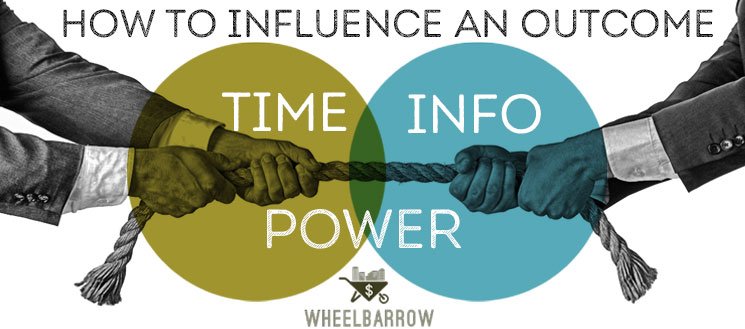
In this article, I would like to define the three essential variables and how you need to employ them in order to become a successful negotiator (get what you want). Read my previous article on How to Successfully Negotiate Your Next Deal for keys and tips on negotiating.


Here are the three variables:

  • 1. Power
  • 2. Time
  • 3. Information

Power:

Power can be defined as the ability to get things done, to exercise control over a situation. It allows you to get from a certain point to an end result. Power does invoke negative connotations, but it all depends upon how it is wielded. To me, power is not the goal. We use power to drive us to the destination.

Here are a few sources of power and how to use them:

Competition:

When there is competition for a product or service, the price will rise. The principle of scarcity is an enormous motivator for those considering the purchase of a product. If people feel there is little competition, the price will inevitably fall. I see this in real estate every day. The price for single-family homes in the New York metro market is very expensive in part to this source of power. You have a large pool of investors chasing after a limited supply of inventory. This leads to prices escalating and margins shrinking. Drive two hours north of Manhattan and the opposite is true. If you can create competition for your product or idea, the price will rise.

Credibility:

A person who lacks credibility will find it more difficult to negotiate effectively. Jake and I created a Credibility Book to convey to brokers and other professionals our legitimacy in the multifamily real estate space. There is no other better way to display your credibility than the written word. I would challenge a person’s credibility when it is to my advantage and use the power of credibility when it is to my advantage.

Expertise:

When a person establishes expertise in a field, we will more than likely heed their advice. A person who goes to the dentist will get that “cavity” filled, usually without asking questions. The doctor said I needed to take care of it. That expertise creates a level of power that a professional can utilize in their negotiations. Jake and I began a podcast in real estate and write weekly articles for our blog and for other prominent real estate websites to develop ourselves as experts in the multifamily space. Remember, the written word is powerful.

Building rapport:

People like to do business with others who they like and respect. Try to build rapport with your counterpart, and find something that you both have in common. It could be your kids, a sports team, a hobby, anything! This will create a level of comfort between the two of you. If a person can identify with you or your story, and you speak to their needs, hopes or dreams, you will be able to create that win-win relationship. You will also believe more coming from a person you know and respect.

Persistent:

Jake’s motto is patience, persistence, but willing to walk away. Allow me to expand further upon persistence. We are becoming a nation of instant gratification with the Internet and social media. Many people try something, and then quickly abandon ship when they don’t achieve results. This is no different in negotiating.
It took us almost eight months to close a deal that we thought would elevate our portfolio to another level. We began the call to action in August, were rejected in October, reengaged the seller in late November and signed contracts on January 13 the following year. Our persistence kept us engaged with the broker throughout the entire process, and we checked back weekly to see if the deal would fall out of contract. I can guarantee if we were not persistent, the deal would have passed us by and we would have lost out on a tremendous opportunity. Be persistent.

Time:

If you’re like me, then becoming disciplined with time is going to be a huge hurdle. I don’t understand the fuss if you want to sell and I want to buy. I had very little patience when it came to negotiating a deal. The New Yorker in me wanted a response now.
It is imperative for you to learn the other side’s deadline, and to keep secret what your deadline is. Most concessions and settlements occur right around the deadline. Think about it. When does your son finish his term paper? When do most people complete that report for the boss? If you know the other side’s deadline, you can delay concessions until the deadline arrives.
In reality, deadlines are usually flexible. Ask yourself what happens if you eclipse the deadline. Will the world end? When you place an artificial date on when something is supposed to happen, you increase the level of stress and tension. Having a flexible deadline offers you more options and more creativity when negotiating. Use time to your advantage by learning your opponent’s deadline and by being more flexible with yours.

Information:

The more you know about your opponent, the easier it will be to solve their problem. Begin to gather information early on in the negotiating process. Visit their website, talk to their competitors and even speak to their employees. Jake and I make it a point to speak to tenants who live at the property we are looking to acquire. We ask them questions about the management, the maintenance, the condition of the property and the type of tenants who live on the property. We make sure to speak to the management company also to get their perspective on the issues involved with managing the property. These probing questions are gold.
In the preliminary stage of information gathering, act like a regular Joe. I was taught to act like the detective Columbo, someone who is non-threatening and who needs a bit of help. It always worked for him. People are more willing to open up to someone who is humble and down to earth.
Our next step is to try and gather information from the source. We try to deal with one broker on every real estate deal because it makes it much easier to gather and convey information to and from the seller. We dealt with two brokers on our second deal, and it was a nightmare. The brokers were more concerned with who was smarter and more successful. This is usually not the case, but we find it much easier to deal with one party. Nothing gets lost in translation.
Learn how to ask empowering questions. Here is an article that I wrote on Empowering Questions! That will help you formulate your questions and improve your information gathering skills.

Task:

Remind yourself constantly of the three essential variables of negotiation. Use them to your advantage and stay persistent.

[/et_pb_text][/et_pb_column][/et_pb_row][/et_pb_section]

How You Can Summon Motivation When You Need It

[et_pb_section bb_built=”1″ inner_width=”auto” inner_max_width=”1920px”][et_pb_row][et_pb_column type=”4_4″ custom_padding__hover=”|||” custom_padding=”|||”][et_pb_text _builder_version=”4.20.2″ background_pattern_color=”rgba(0,0,0,0.2)” background_mask_color=”#ffffff” text_text_shadow_horizontal_length=”text_text_shadow_style,%91object Object%93″ text_text_shadow_horizontal_length_tablet=”0px” text_text_shadow_vertical_length=”text_text_shadow_style,%91object Object%93″ text_text_shadow_vertical_length_tablet=”0px” text_text_shadow_blur_strength=”text_text_shadow_style,%91object Object%93″ text_text_shadow_blur_strength_tablet=”1px” link_text_shadow_horizontal_length=”link_text_shadow_style,%91object Object%93″ link_text_shadow_horizontal_length_tablet=”0px” link_text_shadow_vertical_length=”link_text_shadow_style,%91object Object%93″ link_text_shadow_vertical_length_tablet=”0px” link_text_shadow_blur_strength=”link_text_shadow_style,%91object Object%93″ link_text_shadow_blur_strength_tablet=”1px” ul_text_shadow_horizontal_length=”ul_text_shadow_style,%91object Object%93″ ul_text_shadow_horizontal_length_tablet=”0px” ul_text_shadow_vertical_length=”ul_text_shadow_style,%91object Object%93″ ul_text_shadow_vertical_length_tablet=”0px” ul_text_shadow_blur_strength=”ul_text_shadow_style,%91object Object%93″ ul_text_shadow_blur_strength_tablet=”1px” ol_text_shadow_horizontal_length=”ol_text_shadow_style,%91object Object%93″ ol_text_shadow_horizontal_length_tablet=”0px” ol_text_shadow_vertical_length=”ol_text_shadow_style,%91object Object%93″ ol_text_shadow_vertical_length_tablet=”0px” ol_text_shadow_blur_strength=”ol_text_shadow_style,%91object Object%93″ ol_text_shadow_blur_strength_tablet=”1px” quote_text_shadow_horizontal_length=”quote_text_shadow_style,%91object Object%93″ quote_text_shadow_horizontal_length_tablet=”0px” quote_text_shadow_vertical_length=”quote_text_shadow_style,%91object Object%93″ quote_text_shadow_vertical_length_tablet=”0px” quote_text_shadow_blur_strength=”quote_text_shadow_style,%91object Object%93″ quote_text_shadow_blur_strength_tablet=”1px” header_text_shadow_horizontal_length=”header_text_shadow_style,%91object Object%93″ header_text_shadow_horizontal_length_tablet=”0px” header_text_shadow_vertical_length=”header_text_shadow_style,%91object Object%93″ header_text_shadow_vertical_length_tablet=”0px” header_text_shadow_blur_strength=”header_text_shadow_style,%91object Object%93″ header_text_shadow_blur_strength_tablet=”1px” header_2_text_shadow_horizontal_length=”header_2_text_shadow_style,%91object Object%93″ header_2_text_shadow_horizontal_length_tablet=”0px” header_2_text_shadow_vertical_length=”header_2_text_shadow_style,%91object Object%93″ header_2_text_shadow_vertical_length_tablet=”0px” header_2_text_shadow_blur_strength=”header_2_text_shadow_style,%91object Object%93″ header_2_text_shadow_blur_strength_tablet=”1px” header_3_text_shadow_horizontal_length=”header_3_text_shadow_style,%91object Object%93″ header_3_text_shadow_horizontal_length_tablet=”0px” header_3_text_shadow_vertical_length=”header_3_text_shadow_style,%91object Object%93″ header_3_text_shadow_vertical_length_tablet=”0px” header_3_text_shadow_blur_strength=”header_3_text_shadow_style,%91object Object%93″ header_3_text_shadow_blur_strength_tablet=”1px” header_4_text_shadow_horizontal_length=”header_4_text_shadow_style,%91object Object%93″ header_4_text_shadow_horizontal_length_tablet=”0px” header_4_text_shadow_vertical_length=”header_4_text_shadow_style,%91object Object%93″ header_4_text_shadow_vertical_length_tablet=”0px” header_4_text_shadow_blur_strength=”header_4_text_shadow_style,%91object Object%93″ header_4_text_shadow_blur_strength_tablet=”1px” header_5_text_shadow_horizontal_length=”header_5_text_shadow_style,%91object Object%93″ header_5_text_shadow_horizontal_length_tablet=”0px” header_5_text_shadow_vertical_length=”header_5_text_shadow_style,%91object Object%93″ header_5_text_shadow_vertical_length_tablet=”0px” header_5_text_shadow_blur_strength=”header_5_text_shadow_style,%91object Object%93″ header_5_text_shadow_blur_strength_tablet=”1px” header_6_text_shadow_horizontal_length=”header_6_text_shadow_style,%91object Object%93″ header_6_text_shadow_horizontal_length_tablet=”0px” header_6_text_shadow_vertical_length=”header_6_text_shadow_style,%91object Object%93″ header_6_text_shadow_vertical_length_tablet=”0px” header_6_text_shadow_blur_strength=”header_6_text_shadow_style,%91object Object%93″ header_6_text_shadow_blur_strength_tablet=”1px” box_shadow_horizontal_tablet=”0px” box_shadow_vertical_tablet=”0px” box_shadow_blur_tablet=”40px” box_shadow_spread_tablet=”0px” vertical_offset_tablet=”0″ horizontal_offset_tablet=”0″ z_index_tablet=”0″]

Motivation is defined as “the act or process of giving someone a reason for doing something”. I have come to define motivation as a mental strategy that you can use to perform the tasks you need to get the job done. The problem with most of us is that our motivation is low when we need it most. This article will discuss the two different types of motivated people, how to create a strategy to tap into motivation when it is needed and discuss how values and beliefs affect our motivation and how we can increase our motivation with aligning our actions with our values. Please allow me to use my successes and failures as examples throughout the article to illustrate how you can incorporate the strategy into your life.

The two types of motivated people are the ones who move away from pain or the ones who move towards pleasure. The direction of your motivation is either towards what you want or away from what you don’t want. It is extremely important to find out what type you fall into. I don’t think either strategy is positive or negative, although I would always prefer to move towards what I want and towards whatever brings me joy.

Unfortunately, I fell into the away from pain type. My success in real estate came from moving away from pain. I was dreading the thought of going to work, being stuck in an unfulfilling occupation, not generating enough income and most importantly not living up to my expectations. That is a huge amount of pain. This pain only fueled my desire to seek change and growth. I unknowingly utilized this pain to propel me towards a massive amount of motivation and success.

I did lose my motivation early on. This type of motivation can be cyclical and it can run hot and cold. At one point, I was reassessing my situation and that desire of change was dwindling. My motivation of moving away from pain was rekindled when I stumbled upon an even larger amount of pain. As you move away from the problem, your motivation drops, and as the problem arises, the motivation kicks back in.

Let me show you how this played out in my life. I purchased my first investment property back in 2002, and followed it up with another investment in 2006. I had no strategy, just the notion that real estate was a “good investment”. I had very little success with these investments. Then, 2008 came and the world was changed forever (at least for me). I began to reassess my life and my goals. When I finally decided to invest in real estate and tapped into my move away from motivation, my results exploded. I was able to focus on why I was investing and I was able to purchase 674 units in only three years.

Did I become a better investor? Was I lucky? I attribute my success to the motivation strategy of moving away from the current pain I was experiencing, and I was convinced real estate was the answer. Looking back, I had no idea I was utilizing this strategy. I want you to be conscious of your choices, and if utilizing this strategy will give you the kick in the butt you need, then go for it! People who utilize this strategy are problem solvers. My partner Jake is the perfect example. He is the epitome of MIH (make it happen), and is constantly looking to solve problems and move to the next job.

mom-and-pop-apartments


There is one more problem that people may encounter when using the motivation of moving away from pain. The person may procrastinate and wait a long period of time before taking action. That may lead to a buildup of stress and fear and will inevitably lead to affecting the person’s health. In my case, I was fortunate because I was intent on taking immediate action.

Recently, I have tried to tap into moving towards pleasure more frequently. It is empowering to move towards what you want. When you move towards pleasure, you move towards your goals, towards achievement! People who utilize this strategy are big picture people. You will hear them utter “My goal is to create wealth or to strive for a healthy lifestyle”.

The successful manager uses these strategies to motivate his employees. The manager first has to identify what type of strategy is appropriate for the employee. If the employee responds to moving away from pain, then the manager may be resigned to using threats and pressure for the employee to respond. On the other hand, if the employee responds to moving towards pleasure, a bonus, an award or simple praise for a good job just may be the trick for this employee.

The move away from pain employee will respond less favorably to a bonus. His motivation is not to be reprimanded, and if the manager comes in yelling and screaming, he will fly into action. He will complete the tasks in order NOT to get yelled at.

In order to follow through with action, you need to align your action with your values. Ask yourself these four questions:

  • What are my goals
  • What is important to me
  • What is the value I treasure in this goal
  • What meaning does this hold for me

Values play a key role in motivation. They determine what we move towards or away from. If we don’t’ live up to our values in life, we will experience disappointment. All of our goals, dreams and desires comprise our values. If we have strongly held values, then we will have a strong level of motivation. But if our values are weak, then motivation will wane. Identify your important values and become focused on pursuing them.

Task:

Go back to a period in your life when motivation was abundant. How were you sustaining this motivation? Were you running away from pain (like me), or were you moving towards a pleasurable situation. Once you realize what strategy works, employ that strategy towards a current situation in your life.

Begin to list all the values in your life by answering the four questions. Values make up the meaning that life holds for us! I know, it’s hard work, but you will begin to achieve a level of clarity in your life and you will have a reason why you are striving for a goal. In the end, you want to spend time on what you strive to achieve. It will also supply the rocket fuel (motivation) to work towards the attainment of that goal!

[/et_pb_text][/et_pb_column][/et_pb_row][/et_pb_section]
Our 13 Biggest Mistakes, Part 4

[et_pb_section bb_built=”1″][et_pb_row][et_pb_column type=”4_4″][et_pb_text _builder_version=”4.20.2″ background_pattern_color=”rgba(0,0,0,0.2)” background_mask_color=”#ffffff” text_text_shadow_horizontal_length=”text_text_shadow_style,%91object Object%93″ text_text_shadow_horizontal_length_tablet=”0px” text_text_shadow_vertical_length=”text_text_shadow_style,%91object Object%93″ text_text_shadow_vertical_length_tablet=”0px” text_text_shadow_blur_strength=”text_text_shadow_style,%91object Object%93″ text_text_shadow_blur_strength_tablet=”1px” link_text_shadow_horizontal_length=”link_text_shadow_style,%91object Object%93″ link_text_shadow_horizontal_length_tablet=”0px” link_text_shadow_vertical_length=”link_text_shadow_style,%91object Object%93″ link_text_shadow_vertical_length_tablet=”0px” link_text_shadow_blur_strength=”link_text_shadow_style,%91object Object%93″ link_text_shadow_blur_strength_tablet=”1px” ul_text_shadow_horizontal_length=”ul_text_shadow_style,%91object Object%93″ ul_text_shadow_horizontal_length_tablet=”0px” ul_text_shadow_vertical_length=”ul_text_shadow_style,%91object Object%93″ ul_text_shadow_vertical_length_tablet=”0px” ul_text_shadow_blur_strength=”ul_text_shadow_style,%91object Object%93″ ul_text_shadow_blur_strength_tablet=”1px” ol_text_shadow_horizontal_length=”ol_text_shadow_style,%91object Object%93″ ol_text_shadow_horizontal_length_tablet=”0px” ol_text_shadow_vertical_length=”ol_text_shadow_style,%91object Object%93″ ol_text_shadow_vertical_length_tablet=”0px” ol_text_shadow_blur_strength=”ol_text_shadow_style,%91object Object%93″ ol_text_shadow_blur_strength_tablet=”1px” quote_text_shadow_horizontal_length=”quote_text_shadow_style,%91object Object%93″ quote_text_shadow_horizontal_length_tablet=”0px” quote_text_shadow_vertical_length=”quote_text_shadow_style,%91object Object%93″ quote_text_shadow_vertical_length_tablet=”0px” quote_text_shadow_blur_strength=”quote_text_shadow_style,%91object Object%93″ quote_text_shadow_blur_strength_tablet=”1px” header_text_shadow_horizontal_length=”header_text_shadow_style,%91object Object%93″ header_text_shadow_horizontal_length_tablet=”0px” header_text_shadow_vertical_length=”header_text_shadow_style,%91object Object%93″ header_text_shadow_vertical_length_tablet=”0px” header_text_shadow_blur_strength=”header_text_shadow_style,%91object Object%93″ header_text_shadow_blur_strength_tablet=”1px” header_2_text_shadow_horizontal_length=”header_2_text_shadow_style,%91object Object%93″ header_2_text_shadow_horizontal_length_tablet=”0px” header_2_text_shadow_vertical_length=”header_2_text_shadow_style,%91object Object%93″ header_2_text_shadow_vertical_length_tablet=”0px” header_2_text_shadow_blur_strength=”header_2_text_shadow_style,%91object Object%93″ header_2_text_shadow_blur_strength_tablet=”1px” header_3_text_shadow_horizontal_length=”header_3_text_shadow_style,%91object Object%93″ header_3_text_shadow_horizontal_length_tablet=”0px” header_3_text_shadow_vertical_length=”header_3_text_shadow_style,%91object Object%93″ header_3_text_shadow_vertical_length_tablet=”0px” header_3_text_shadow_blur_strength=”header_3_text_shadow_style,%91object Object%93″ header_3_text_shadow_blur_strength_tablet=”1px” header_4_text_shadow_horizontal_length=”header_4_text_shadow_style,%91object Object%93″ header_4_text_shadow_horizontal_length_tablet=”0px” header_4_text_shadow_vertical_length=”header_4_text_shadow_style,%91object Object%93″ header_4_text_shadow_vertical_length_tablet=”0px” header_4_text_shadow_blur_strength=”header_4_text_shadow_style,%91object Object%93″ header_4_text_shadow_blur_strength_tablet=”1px” header_5_text_shadow_horizontal_length=”header_5_text_shadow_style,%91object Object%93″ header_5_text_shadow_horizontal_length_tablet=”0px” header_5_text_shadow_vertical_length=”header_5_text_shadow_style,%91object Object%93″ header_5_text_shadow_vertical_length_tablet=”0px” header_5_text_shadow_blur_strength=”header_5_text_shadow_style,%91object Object%93″ header_5_text_shadow_blur_strength_tablet=”1px” header_6_text_shadow_horizontal_length=”header_6_text_shadow_style,%91object Object%93″ header_6_text_shadow_horizontal_length_tablet=”0px” header_6_text_shadow_vertical_length=”header_6_text_shadow_style,%91object Object%93″ header_6_text_shadow_vertical_length_tablet=”0px” header_6_text_shadow_blur_strength=”header_6_text_shadow_style,%91object Object%93″ header_6_text_shadow_blur_strength_tablet=”1px” box_shadow_horizontal_tablet=”0px” box_shadow_vertical_tablet=”0px” box_shadow_blur_tablet=”40px” box_shadow_spread_tablet=”0px” vertical_offset_tablet=”0″ horizontal_offset_tablet=”0″ z_index_tablet=”0″]

In the previous article, Jake and I discussed incompetent team members and signing an exclusive with a broker. In this article, we are going to tackle two problems and one potential value-add that we faced early on in our investing career. One situation was unavoidable, and the other could have been avoided if we planned correctly. We stumbled upon the value-add with utilities, nevertheless, it has been a vital component to our success as multifamily operators.

Let me recap the 13 mistakes:

  • Nightmare manager
  • Unscrupulous mortgage broker
  • Incompetent team member
  • Sub-par employees
  • Deceased tenant
  • Bed bugs
  • Septic systems
  • Safety net
  • Long-term holdings
  • Signing an exclusive with a broker
  • Utilities
  • Capital expenditures
  • Negotiation

Deceased tenant

If you own an extensive portfolio of properties, chances are, at some point, you’re unfortunately going to have to deal with this sad situation. We’ve dealt with it ourselves; we just didn’t expect it to happen with our first deal.
The tenant had been living at the property when we acquired it. We owned the property for only six months when the property manager entered the apartment and found the tenant deceased in the living room. We were completely shocked and saddened. The police were called, the woman was taken away, and we were told not to allow anyone in the apartment until after an investigation was completed.
All of a sudden, family members started coming out of the woodwork trying to lay claim to this poor woman’s possessions, but we were adamant that no one was allowed to enter. We waited for a judge to award custody of the belongings to the rightful owners, and then we proceeded to clear out the remaining items before performing a total rehab on the unit. This is an area that you must be mentally prepared for and understand the process, even if you think it’ll never happen to you.
We recommend that you contact an attorney who is familiar with the tenant laws and ask him what procedure to follow. We tried to have the utmost respect for the tenant’s belongings, and allowed her family to rightfully claim her possessions once they were awarded. Our advice is to take your time and follow all the tenant laws in your state. If you need to clear out the apartment, make sure you take pictures of all the possessions and then store them somewhere else. DO not throw anything away.

Safety net

We purchased our first investment with great terms, and that allowed us to put down only 10% of the purchase price. Our cash-on-cash return was phenomenal, but we didn’t deposit enough money in the bank account to complete the deferred maintenance. We could only perform the repairs in drips and drabs, and when the septic system failed, things weren’t looking good (they weren’t smelling good either).
Our luck turned when we hired a plumber who gave us a terrific price and would be able to perform the repairs quickly. He also allowed us to pay him in installments, which saved us from coming out of pocket for the repairs. We repaired the system and were able to avoid a potentially disastrous situation.

When you’re buying a property, always make sure to add an additional 1% of the purchase price as a safety net. The extra cash will allow you to complete the deferred maintenance and protect you against any unforeseen happenings.

You can also request a repair allowance from the seller to use as additional funds to rehab the property. Either way, make sure to have a surplus of funds in the bank for any unforeseen events. Another strategy that investors employ is to secure a line of credit from a bank for those unforeseen events. There are banks that will have lending products that are specific to an investor’s needs. Jake & I would have really appreciated a line of credit that was interest only for two years. Get in touch with your banker and find out what products they can offer you.
We learned very quickly how profitable it is to address utility consumption at your property. It is one of the pillars of profitability for our real estate company. You need to explore your options when dealing with utilities. Utilities will only continue to escalate, and your cash flow will be doomed if you can’t control your utilities.

Utilities

One of our major value plays is to locate properties where the landlord pays all of the utilities. This is commonly referred to as all bills paid. With some properties, the landlord has metered off electric and water to each unit so that the tenant is responsible to pay. However, many of the older buildings utilize only one water meter and one electric meter for the entire property. Having the tenants pay serves a dual purpose. First, it will lower your operating expenses tremendously, thus allowing your net operating income to rise along with the value of your asset. Secondly, usage will decrease once tenants are being billed directly.

With our properties, we institute a Ratio Utility Billing System, which calculates a resident’s water usage and garbage costs based on occupancy, square footage, number of occupants, or a combination of these factors. It’s a very beneficial system. Not only can it be installed quickly and property owners can recoup a large percentage of their utility expense, but there’s no capital expenditure involved. There are several companies that will handle all of the calculations and bill the tenants monthly so you don’t have to. Click HERE to read our article that describes our three-step repositioning framework and how you can implement RUBS into your investment.

Before you incorporate this system into your own property, make sure that the rest of the local market is already doing it. If you’re the only complex utilizing the system, you’ll lose tenants because they can rent your competitor’s apartment for a cheaper price.

Task
Begin to shift your mindset on how you view problems. Every successful individual views problems as opportunities, and the bigger the problem, the bigger the opportunity. It definitely takes time, but I want you to raise your level of awareness, acknowledge the “problem” and attack the problem from a positive angle. Try to look for anything good that can come out of the situation. For instance, when we lost a key employee, we felt that something good had to surface. It was a short term hit, but it ended up being a blessing in disguise. We ended up hiring a rock star employee, promoted another employee and have witnessed a dramatic increase in our results.


[/et_pb_text][/et_pb_column][/et_pb_row][/et_pb_section]

My Advice To Those Thinking About Giving Up

[et_pb_section bb_built=”1″][et_pb_row][et_pb_column type=”4_4″][et_pb_text _builder_version=”4.20.2″ background_pattern_color=”rgba(0,0,0,0.2)” background_mask_color=”#ffffff” text_text_shadow_horizontal_length=”text_text_shadow_style,%91object Object%93″ text_text_shadow_horizontal_length_tablet=”0px” text_text_shadow_vertical_length=”text_text_shadow_style,%91object Object%93″ text_text_shadow_vertical_length_tablet=”0px” text_text_shadow_blur_strength=”text_text_shadow_style,%91object Object%93″ text_text_shadow_blur_strength_tablet=”1px” link_text_shadow_horizontal_length=”link_text_shadow_style,%91object Object%93″ link_text_shadow_horizontal_length_tablet=”0px” link_text_shadow_vertical_length=”link_text_shadow_style,%91object Object%93″ link_text_shadow_vertical_length_tablet=”0px” link_text_shadow_blur_strength=”link_text_shadow_style,%91object Object%93″ link_text_shadow_blur_strength_tablet=”1px” ul_text_shadow_horizontal_length=”ul_text_shadow_style,%91object Object%93″ ul_text_shadow_horizontal_length_tablet=”0px” ul_text_shadow_vertical_length=”ul_text_shadow_style,%91object Object%93″ ul_text_shadow_vertical_length_tablet=”0px” ul_text_shadow_blur_strength=”ul_text_shadow_style,%91object Object%93″ ul_text_shadow_blur_strength_tablet=”1px” ol_text_shadow_horizontal_length=”ol_text_shadow_style,%91object Object%93″ ol_text_shadow_horizontal_length_tablet=”0px” ol_text_shadow_vertical_length=”ol_text_shadow_style,%91object Object%93″ ol_text_shadow_vertical_length_tablet=”0px” ol_text_shadow_blur_strength=”ol_text_shadow_style,%91object Object%93″ ol_text_shadow_blur_strength_tablet=”1px” quote_text_shadow_horizontal_length=”quote_text_shadow_style,%91object Object%93″ quote_text_shadow_horizontal_length_tablet=”0px” quote_text_shadow_vertical_length=”quote_text_shadow_style,%91object Object%93″ quote_text_shadow_vertical_length_tablet=”0px” quote_text_shadow_blur_strength=”quote_text_shadow_style,%91object Object%93″ quote_text_shadow_blur_strength_tablet=”1px” header_text_shadow_horizontal_length=”header_text_shadow_style,%91object Object%93″ header_text_shadow_horizontal_length_tablet=”0px” header_text_shadow_vertical_length=”header_text_shadow_style,%91object Object%93″ header_text_shadow_vertical_length_tablet=”0px” header_text_shadow_blur_strength=”header_text_shadow_style,%91object Object%93″ header_text_shadow_blur_strength_tablet=”1px” header_2_text_shadow_horizontal_length=”header_2_text_shadow_style,%91object Object%93″ header_2_text_shadow_horizontal_length_tablet=”0px” header_2_text_shadow_vertical_length=”header_2_text_shadow_style,%91object Object%93″ header_2_text_shadow_vertical_length_tablet=”0px” header_2_text_shadow_blur_strength=”header_2_text_shadow_style,%91object Object%93″ header_2_text_shadow_blur_strength_tablet=”1px” header_3_text_shadow_horizontal_length=”header_3_text_shadow_style,%91object Object%93″ header_3_text_shadow_horizontal_length_tablet=”0px” header_3_text_shadow_vertical_length=”header_3_text_shadow_style,%91object Object%93″ header_3_text_shadow_vertical_length_tablet=”0px” header_3_text_shadow_blur_strength=”header_3_text_shadow_style,%91object Object%93″ header_3_text_shadow_blur_strength_tablet=”1px” header_4_text_shadow_horizontal_length=”header_4_text_shadow_style,%91object Object%93″ header_4_text_shadow_horizontal_length_tablet=”0px” header_4_text_shadow_vertical_length=”header_4_text_shadow_style,%91object Object%93″ header_4_text_shadow_vertical_length_tablet=”0px” header_4_text_shadow_blur_strength=”header_4_text_shadow_style,%91object Object%93″ header_4_text_shadow_blur_strength_tablet=”1px” header_5_text_shadow_horizontal_length=”header_5_text_shadow_style,%91object Object%93″ header_5_text_shadow_horizontal_length_tablet=”0px” header_5_text_shadow_vertical_length=”header_5_text_shadow_style,%91object Object%93″ header_5_text_shadow_vertical_length_tablet=”0px” header_5_text_shadow_blur_strength=”header_5_text_shadow_style,%91object Object%93″ header_5_text_shadow_blur_strength_tablet=”1px” header_6_text_shadow_horizontal_length=”header_6_text_shadow_style,%91object Object%93″ header_6_text_shadow_horizontal_length_tablet=”0px” header_6_text_shadow_vertical_length=”header_6_text_shadow_style,%91object Object%93″ header_6_text_shadow_vertical_length_tablet=”0px” header_6_text_shadow_blur_strength=”header_6_text_shadow_style,%91object Object%93″ header_6_text_shadow_blur_strength_tablet=”1px” box_shadow_horizontal_tablet=”0px” box_shadow_vertical_tablet=”0px” box_shadow_blur_tablet=”40px” box_shadow_spread_tablet=”0px” vertical_offset_tablet=”0″ horizontal_offset_tablet=”0″ z_index_tablet=”0″]

Do you ever find yourself stuck, with thoughts of doubt and anxiety creeping in? Don’t know what the next step is? This is a perfect description of how I was feeling during the first two years of my investing career with Jake. We were excited to begin buying apartments, but had no idea what we were getting ourselves into. The only thing we knew was that we were unhappy with our current situations and wanted to achieve better results.

This article will provide advice on how to conquer these feelings of self-doubt and help you formulate a game plan. It will also focus on what it is you are trying to accomplish, as well as shatter the myth that mistakes are bad. My goal is to provide a blue print for you to follow once you have found your passion and you are having second thoughts of pursuing your passion and contemplating quitting.

The first step that you need to take is to figure out what you want in life. Notice, I didn’t say what you don’t want. Most of us can rattle off things that we don’t want. But very few of us can express with certainty what we truly desire in our lives. This may take a bit of soul searching, but invest the time in yourself and your direction in life, or else life will just happen to you.

This was one of my major stumbling blocks when I began investing in real estate several years ago. I was not focused on why I was investing in real estate. I heard countless times that real estate was responsible for creating the vast majority of millionaires in this country. My success in real estate came when I realized what it was that I wanted in my life. I wanted to get out of the rat race and be able to impact other people’s lives through coaching and teaching. This clarity gave me the strength to push ahead, or as Jake would say, grind it out. There were days when I just wanted to quit, but the picture of not working at my restaurant and growing my portfolio only energized me.

If the thought of giving up continues to persist, revisit the thought of knowing your outcome. You have to become clear of your outcome, know why you want it, and the reason why you want it. Your purpose for wanting to achieve the goal will provide the drive that you need once thoughts of quitting begin to enter your mind. Successful people know what they want and why they want it.

The reasons for your wants and desires come first. If you have enough reasons, answers will come next. Build a case for yourself as to all the reasons why you want something. I can use my example of wanting to succeed in real estate. As I was getting older and more disgruntled with my current situation, I was accumulating a plethora of reasons. Finally, I had enough reasons, and the solution to my investing problem presented itself.

The solution came as a result of a simple conversation that I had with my partner Jake before he moved to Tennessee. I found out that he was experiencing similar frustrations in his life. We conspired to form a partnership and begin to seek out opportunities in Tennessee. It was a difficult journey at first. I reminded myself constantly of the reasons why I wanted to succeed in real estate, and this constant reminder led me to “stay the course” and not give up on my dream of financial independence.

Another avenue that I used to maintain my desire and motivation was to seek out a life coach. The use of a coach transformed my life and the way I approached problems. I was able to narrow down my goals, focus on my higher purpose, develop a plan to pursue my passion, and be held accountable for my actions. My coach pushed me when I felt like quitting and brought clarity to my life. I was so impressed with my life coach that I decided to attend coaching school and become a Certified Professional Coach. If you are looking to explore life coaching, visit my site Gino Barbaro for more information on how coaching can reawaken the passion in your life.

Steps to achieving your goal and staying the course:

  • Know your outcome
  • Choose your goals
  • Know why (the purpose) you want to achieve your goal
  • List all the reasons why
  • Look for the answers once you have amassed enough reasons
  • Take action
  • Patience and persistence
  • Look for support from a life coach or mentor when things get tough

The key to remember is that successful people know what they want and why. When the going gets tough, they will have strong enough reasons why for them to continue the journey. Please let me know what your strategy is when things get tough, yet you continue to push forward and not give up.

[/et_pb_text][/et_pb_column][/et_pb_row][/et_pb_section]

A Letter To My 30 Year Old Self

[et_pb_section bb_built=”1″][et_pb_row][et_pb_column type=”4_4″][et_pb_text _builder_version=”4.20.2″ background_pattern_color=”rgba(0,0,0,0.2)” background_mask_color=”#ffffff” text_text_shadow_horizontal_length=”text_text_shadow_style,%91object Object%93″ text_text_shadow_horizontal_length_tablet=”0px” text_text_shadow_vertical_length=”text_text_shadow_style,%91object Object%93″ text_text_shadow_vertical_length_tablet=”0px” text_text_shadow_blur_strength=”text_text_shadow_style,%91object Object%93″ text_text_shadow_blur_strength_tablet=”1px” link_text_shadow_horizontal_length=”link_text_shadow_style,%91object Object%93″ link_text_shadow_horizontal_length_tablet=”0px” link_text_shadow_vertical_length=”link_text_shadow_style,%91object Object%93″ link_text_shadow_vertical_length_tablet=”0px” link_text_shadow_blur_strength=”link_text_shadow_style,%91object Object%93″ link_text_shadow_blur_strength_tablet=”1px” ul_text_shadow_horizontal_length=”ul_text_shadow_style,%91object Object%93″ ul_text_shadow_horizontal_length_tablet=”0px” ul_text_shadow_vertical_length=”ul_text_shadow_style,%91object Object%93″ ul_text_shadow_vertical_length_tablet=”0px” ul_text_shadow_blur_strength=”ul_text_shadow_style,%91object Object%93″ ul_text_shadow_blur_strength_tablet=”1px” ol_text_shadow_horizontal_length=”ol_text_shadow_style,%91object Object%93″ ol_text_shadow_horizontal_length_tablet=”0px” ol_text_shadow_vertical_length=”ol_text_shadow_style,%91object Object%93″ ol_text_shadow_vertical_length_tablet=”0px” ol_text_shadow_blur_strength=”ol_text_shadow_style,%91object Object%93″ ol_text_shadow_blur_strength_tablet=”1px” quote_text_shadow_horizontal_length=”quote_text_shadow_style,%91object Object%93″ quote_text_shadow_horizontal_length_tablet=”0px” quote_text_shadow_vertical_length=”quote_text_shadow_style,%91object Object%93″ quote_text_shadow_vertical_length_tablet=”0px” quote_text_shadow_blur_strength=”quote_text_shadow_style,%91object Object%93″ quote_text_shadow_blur_strength_tablet=”1px” header_text_shadow_horizontal_length=”header_text_shadow_style,%91object Object%93″ header_text_shadow_horizontal_length_tablet=”0px” header_text_shadow_vertical_length=”header_text_shadow_style,%91object Object%93″ header_text_shadow_vertical_length_tablet=”0px” header_text_shadow_blur_strength=”header_text_shadow_style,%91object Object%93″ header_text_shadow_blur_strength_tablet=”1px” header_2_text_shadow_horizontal_length=”header_2_text_shadow_style,%91object Object%93″ header_2_text_shadow_horizontal_length_tablet=”0px” header_2_text_shadow_vertical_length=”header_2_text_shadow_style,%91object Object%93″ header_2_text_shadow_vertical_length_tablet=”0px” header_2_text_shadow_blur_strength=”header_2_text_shadow_style,%91object Object%93″ header_2_text_shadow_blur_strength_tablet=”1px” header_3_text_shadow_horizontal_length=”header_3_text_shadow_style,%91object Object%93″ header_3_text_shadow_horizontal_length_tablet=”0px” header_3_text_shadow_vertical_length=”header_3_text_shadow_style,%91object Object%93″ header_3_text_shadow_vertical_length_tablet=”0px” header_3_text_shadow_blur_strength=”header_3_text_shadow_style,%91object Object%93″ header_3_text_shadow_blur_strength_tablet=”1px” header_4_text_shadow_horizontal_length=”header_4_text_shadow_style,%91object Object%93″ header_4_text_shadow_horizontal_length_tablet=”0px” header_4_text_shadow_vertical_length=”header_4_text_shadow_style,%91object Object%93″ header_4_text_shadow_vertical_length_tablet=”0px” header_4_text_shadow_blur_strength=”header_4_text_shadow_style,%91object Object%93″ header_4_text_shadow_blur_strength_tablet=”1px” header_5_text_shadow_horizontal_length=”header_5_text_shadow_style,%91object Object%93″ header_5_text_shadow_horizontal_length_tablet=”0px” header_5_text_shadow_vertical_length=”header_5_text_shadow_style,%91object Object%93″ header_5_text_shadow_vertical_length_tablet=”0px” header_5_text_shadow_blur_strength=”header_5_text_shadow_style,%91object Object%93″ header_5_text_shadow_blur_strength_tablet=”1px” header_6_text_shadow_horizontal_length=”header_6_text_shadow_style,%91object Object%93″ header_6_text_shadow_horizontal_length_tablet=”0px” header_6_text_shadow_vertical_length=”header_6_text_shadow_style,%91object Object%93″ header_6_text_shadow_vertical_length_tablet=”0px” header_6_text_shadow_blur_strength=”header_6_text_shadow_style,%91object Object%93″ header_6_text_shadow_blur_strength_tablet=”1px” box_shadow_horizontal_tablet=”0px” box_shadow_vertical_tablet=”0px” box_shadow_blur_tablet=”40px” box_shadow_spread_tablet=”0px” vertical_offset_tablet=”0″ horizontal_offset_tablet=”0″ z_index_tablet=”0″]

As I approach my first year since “retiring” from my restaurant business, I decided to reflect back and analyze the path I took to reach my current state of affairs. Although I have only a couple of regrets, the ones that I do have are huge. My motivation in writing this article is to illustrate these mistakes with the hope that those embarking on a career or new venture will be able to make a conscious decision for themselves and lead an empowering life.

When I was thirty years old, I was consumed with the restaurant business and devoted my energy towards its success. The business was growing and very profitable, but I was treating it as a high paying job and not a business. I was working in the business and not on the business. This is the largest regret that I have as I look back. I was more interested in a nice paycheck than trying to scale a business and create real wealth.

I should have focused on financial freedom and getting out of the rat race sooner.

Becoming financially free opens your life up to so many opportunities. It has allowed me to concentrate on what I am passionate about, family and real estate. The more passion you exhibit in any endeavor, the better you are at it and the happier you are. Bottom line!

I had it backwards.

My business was dictating my lifestyle instead of my lifestyle dictating my business. I was somewhat content in what I was doing, but there was no thought of creating passive income or multiple streams of revenue. The economy was humming along too well for me to focus on these wealth-building principles. The Great Recession of 2008 woke me up to the fact that I was a slave to my situation and to my paycheck. What was my next step?

I finally took responsibility for my results and dove in head first towards personal development. I realized that I was the one in control of my results, not the economy and certainly not any politician. Once I entered coaching school, I viewed life and achievement from a different perspective and my results exploded. I was able to leave the restaurant four years after I came to the realization,

“Enough was enough”.

This lack of personal development was my second regret in life. My ignorance of goal setting and taking personal responsibility hindered my ability to grow as a person. Once I began to listen to coaches such as Tony Robbins and Zig Ziglar, I was exposed to how a successful person acted.

mom-and-pop-apartments-book

I began to surround myself with smarter and better people, and I immersed myself in all types of education.

I began to ask myself tougher questions, such as “Where am I going to be in five years”, “What is going to make me happy” and “Who am I”? The quality of your life is in direct proportion to the quality of questions you can ask yourself. Up to this point in my life, I wasn’t asking myself any questions.

My growth began when I started to challenge myself.

I have been blessed with six children and an amazing wife, although I allowed external forces and society to dictate how I felt about having a large family. The first comment out of anyone’s mouth when they heard that I had a large family was “Just wait until college and weddings start coming up”. This only added to my stress at work, and I was beginning to regret my decision of having a large family. The turning point for me was when my wife had an ectopic pregnancy, (her tube ruptured). I was crushed that we had lost a baby and that my wife had to endure such pain.
After that moment, any thought of financial responsibility quickly vanished and I haven’t looked back. I just wish I had come to this realization a lot sooner. Funny thing is that I rarely get those questions about paying for college. I think that I have become more relaxed and my focus is on enjoying every day with them.
My goal in writing this article is to allow you to choose your own path and to make empowering decisions about your career and your family. I want you to embrace personal development and set goals for your life. Don’t let your life happen to you; take control of your life. Finally, always focus on big goals that will elicit the passion in your life. Today is the first day starting the rest of your life!

[/et_pb_text][/et_pb_column][/et_pb_row][/et_pb_section]

The Steps I Took To Owning 674 Multifamily Real Estate Units

[et_pb_section bb_built=”1″ inner_width=”auto” inner_max_width=”1920px”][et_pb_row][et_pb_column type=”4_4″ custom_padding__hover=”|||” custom_padding=”|||”][et_pb_text _builder_version=”4.20.2″ background_pattern_color=”rgba(0,0,0,0.2)” background_mask_color=”#ffffff” text_text_shadow_horizontal_length=”text_text_shadow_style,%91object Object%93″ text_text_shadow_horizontal_length_tablet=”0px” text_text_shadow_vertical_length=”text_text_shadow_style,%91object Object%93″ text_text_shadow_vertical_length_tablet=”0px” text_text_shadow_blur_strength=”text_text_shadow_style,%91object Object%93″ text_text_shadow_blur_strength_tablet=”1px” link_text_shadow_horizontal_length=”link_text_shadow_style,%91object Object%93″ link_text_shadow_horizontal_length_tablet=”0px” link_text_shadow_vertical_length=”link_text_shadow_style,%91object Object%93″ link_text_shadow_vertical_length_tablet=”0px” link_text_shadow_blur_strength=”link_text_shadow_style,%91object Object%93″ link_text_shadow_blur_strength_tablet=”1px” ul_text_shadow_horizontal_length=”ul_text_shadow_style,%91object Object%93″ ul_text_shadow_horizontal_length_tablet=”0px” ul_text_shadow_vertical_length=”ul_text_shadow_style,%91object Object%93″ ul_text_shadow_vertical_length_tablet=”0px” ul_text_shadow_blur_strength=”ul_text_shadow_style,%91object Object%93″ ul_text_shadow_blur_strength_tablet=”1px” ol_text_shadow_horizontal_length=”ol_text_shadow_style,%91object Object%93″ ol_text_shadow_horizontal_length_tablet=”0px” ol_text_shadow_vertical_length=”ol_text_shadow_style,%91object Object%93″ ol_text_shadow_vertical_length_tablet=”0px” ol_text_shadow_blur_strength=”ol_text_shadow_style,%91object Object%93″ ol_text_shadow_blur_strength_tablet=”1px” quote_text_shadow_horizontal_length=”quote_text_shadow_style,%91object Object%93″ quote_text_shadow_horizontal_length_tablet=”0px” quote_text_shadow_vertical_length=”quote_text_shadow_style,%91object Object%93″ quote_text_shadow_vertical_length_tablet=”0px” quote_text_shadow_blur_strength=”quote_text_shadow_style,%91object Object%93″ quote_text_shadow_blur_strength_tablet=”1px” header_text_shadow_horizontal_length=”header_text_shadow_style,%91object Object%93″ header_text_shadow_horizontal_length_tablet=”0px” header_text_shadow_vertical_length=”header_text_shadow_style,%91object Object%93″ header_text_shadow_vertical_length_tablet=”0px” header_text_shadow_blur_strength=”header_text_shadow_style,%91object Object%93″ header_text_shadow_blur_strength_tablet=”1px” header_2_text_shadow_horizontal_length=”header_2_text_shadow_style,%91object Object%93″ header_2_text_shadow_horizontal_length_tablet=”0px” header_2_text_shadow_vertical_length=”header_2_text_shadow_style,%91object Object%93″ header_2_text_shadow_vertical_length_tablet=”0px” header_2_text_shadow_blur_strength=”header_2_text_shadow_style,%91object Object%93″ header_2_text_shadow_blur_strength_tablet=”1px” header_3_text_shadow_horizontal_length=”header_3_text_shadow_style,%91object Object%93″ header_3_text_shadow_horizontal_length_tablet=”0px” header_3_text_shadow_vertical_length=”header_3_text_shadow_style,%91object Object%93″ header_3_text_shadow_vertical_length_tablet=”0px” header_3_text_shadow_blur_strength=”header_3_text_shadow_style,%91object Object%93″ header_3_text_shadow_blur_strength_tablet=”1px” header_4_text_shadow_horizontal_length=”header_4_text_shadow_style,%91object Object%93″ header_4_text_shadow_horizontal_length_tablet=”0px” header_4_text_shadow_vertical_length=”header_4_text_shadow_style,%91object Object%93″ header_4_text_shadow_vertical_length_tablet=”0px” header_4_text_shadow_blur_strength=”header_4_text_shadow_style,%91object Object%93″ header_4_text_shadow_blur_strength_tablet=”1px” header_5_text_shadow_horizontal_length=”header_5_text_shadow_style,%91object Object%93″ header_5_text_shadow_horizontal_length_tablet=”0px” header_5_text_shadow_vertical_length=”header_5_text_shadow_style,%91object Object%93″ header_5_text_shadow_vertical_length_tablet=”0px” header_5_text_shadow_blur_strength=”header_5_text_shadow_style,%91object Object%93″ header_5_text_shadow_blur_strength_tablet=”1px” header_6_text_shadow_horizontal_length=”header_6_text_shadow_style,%91object Object%93″ header_6_text_shadow_horizontal_length_tablet=”0px” header_6_text_shadow_vertical_length=”header_6_text_shadow_style,%91object Object%93″ header_6_text_shadow_vertical_length_tablet=”0px” header_6_text_shadow_blur_strength=”header_6_text_shadow_style,%91object Object%93″ header_6_text_shadow_blur_strength_tablet=”1px” box_shadow_horizontal_tablet=”0px” box_shadow_vertical_tablet=”0px” box_shadow_blur_tablet=”40px” box_shadow_spread_tablet=”0px” vertical_offset_tablet=”0″ horizontal_offset_tablet=”0″ z_index_tablet=”0″]

I wish I could say that I woke up one morning and God had bestowed upon me 674 multifamily real estate units. Unfortunately, life doesn’t work that way. The farmer can’t expect a crop in the summer if he doesn’t plant seed in the spring. The builder can’t complete a house unless he starts off with a set of plans and follows his plans to fruition. This article will outline the steps I took to grow my portfolio and achieve a level of professional satisfaction that was missing in my life.

Where is the first place that I started? Let me give a brief outline of my journey and then dive deeper into the “trek”.
  • Dissatisfaction
  • Seeking growth/contribution
  • Financially frustrated
  • Began investing on my own
  • Sought out a mentor
  • Pursued another coach/more education
  • Continued frustration
  • Jumped into Tennessee market
  • Focused on Tennessee and multifamily properties
  • Bought first deal
  • Continued to buy
  • Refinanced big property and used capital to continue buying.
  • Wrote “Wheelbarrow Profits” based on evolving investment strategy “mom and pop apartments”
  • Launched Jake & Gino
  • Continued buying more multifamily real estate deals
  • Focused on system building and growing multifamily real estate portfolio

The first step of my journey was dissatisfaction. My business was okay, but I had just lost my father to cancer and I was growing bored with working in the kitchen. I had been working with dad since I was eight years old. I guess when my dad passed away, my love for the restaurant business passed away with him.

I also had a feeling of being “stuck”. The only way I can describe it is going in to work and feeling as if I had nothing to contribute. I was looking to make an impact, a difference in people’s lives. How could I do that being stuck in the kitchen making chicken parm? Tony Robbins opened my eyes and heart to why I was exhibiting these feelings. His explanation of the six human needs hit home with me. I was not fulfilling the last two needs, growth and contribution.

Also read: Understanding The Six Human Needs & How to Satisfy Them All

On top of feeling stuck, I was feeling financially frustrated. How was it possible that I was earning less money and working longer hours? I attributed it to the Great Recession, but I now know better. I was to blame, no one else. But, what could I do to improve my situation?

My answer was to begin investing in real estate. I bought my first investment down in Florida with a friend and my brother. Huge mistake. I was taking action, but I was taking uneducated action. I placed too much trust in my friend, and this first deal blew up.

Fortunately, I did not give up after this colossal mistake. I was too frustrated with my present situation that I craved a change in my life. If I did not possess this desire, then I may have just packed it in. My mantra is: Thought-Desire-Action-Result. What does this mean?

My thought of financial freedom led to a burning desire, which coupled with massive action, would lead to a result. If my thought wasn’t a burning desire, then the thought would just dissipate. I had the good fortune of having a strong desire.

mom-and-pop-apartments

Unfortunately, I took the wrong massive action (I was an uneducated investor, aka I was the man who had the money and I met the man with the experience and the man who had the experience ended up getting the money and I ended up getting the experience), which led to my result, a terrible investment.

After this total loss, I decided to seek out a mentor. I signed up with a real estate coaching program, and I quickly realized why my first investment was a total failure. This was a turning point in my life. I was learning how to invest in real estate from someone who had success, and I began to invest outside my market.

Must read: Three-Step Framework For Performing Due Diligence

Although I had taken a huge step, I felt that I needed more education. I signed up with another coaching program, and my focus now was on learning everything I could about multifamily investing. This is when I met my partner Jake. Ironically, he was experiencing the same frustration in life that I had, and he was relocating to Knoxville, TN, to escape the high costs of New York and focus on quality of life. Before he left, we spoke briefly about possibly partnering and investing in real estate down in Tennessee. I told him to contact me when he was settled in.

I received a call two months later, and we began to analyze his market. His market was far superior to our market in New York, and we began our hunt for the first deal. During the process, Jake became increasingly frustrated and decided to “blow” his capital for a down payment for his house. Sometimes, the wife wins over our desires.

That did not deter us. We continued to scour the market, engaging brokers and receiving rejection after rejection. One broker even lamented, “You all will never do business down here!” We began to think he was right.

But, low and behold, after two years of constant rejection, we stumbled across a listing on Loop Net called “The Shamrock”. This property had been on the market for over two years, and was listed for $750,000. The property was twenty- five units that comprised multiple cottages, duplexes and a six-plex building. It was not your typical apartment complex, but I saw the potential in fixing up the property and raising the revenue.

We offered $600,000, with 10% down, 10% owner financing, and the remainder bank financing. The sellers accepted our offer, and we finally landed our first deal. Our total closing costs for the deal was $84,000. Doubt quickly set in. Did we overpay, is the property going to cash flow, can we perform all the repairs? We were experiencing buyers remorse.

This remorse quickly vanished once Jake went to collect the first month’s rent. I will never forget the phone call. He sounded like a kid in the candy store. He was amazed at how much cash he collected, and he had it all stacked up on his dresser. Jake was hooked!

It took us a few months to perform basic repairs to the property and turn over the tenant base. It was overwhelming at first, but our desire to succeed just pushed us forward. I called it on the job training, and we were learning something new every day.

Learn how to analyze a multifamily real estate deal quickly and accurately >> Deal Analyzer

Four months after our first acquisition, we spotted a thirty-six-unit property on Loop Net. It was love at first sight. This deal was very similar to our first purchase, and we had to find a way to come up with the down payment. I showed this deal to a friend in New York, and he decided to partner with us in acquiring the property.

Six months after our second purchase, we located another big deal that we fell in love with. After three months of grueling negotiations, we closed on the deal and we were proud owners of a 136-unit apartment complex. I was flabbergasted. One year ago, we were struggling to find a deal. Now, we were the proud owners of 197 units.

Jake and I noticed a common theme throughout our portfolio. We were attracted to “mom and pop” owners, a term that Jake came up with to describe our properties. These properties all exhibited deferred maintenance, motivated sellers and the ability to add value. We continued to look for these mom and pops.

Our attention turned to managing these properties and focusing on the abysmal operations. On our 136 unit deal, the former owners were collecting around $53,000 per month in revenue. Within a year of purchase, the revenue exploded to around $85,000 per month. Our goal now was to refinance the property and extract the capital for our future purchases. It took us almost one year to refinance the property, but persistence pays off. We pulled out $1.6 million dollars from this one deal. During the next twelve months, we refinanced our first two deals, and began to finally comprehend the power of multifamily investing.

At this point, Jake came up with the idea of writing a book detailing our investment success. He wanted to share his story with countless W2 earners, and show them a way to quit their job and achieve financial freedom. I thought he was crazy, but decided to give it a shot. This is where our investing framework was born: “Buy Right, Manage Right and Finance Right”.

Writing the book forced me to educate myself even more, and I began to learn new techniques and strategies. During the writing of the book, we purchased a 281-unit deal with no money down. Was it luck or just a coincidence? I’ll never know, but the education and experience were critical to landing this deal.

After the book was complete, we launched Jake & Gino, a real estate education company focused on multifamily investing. We created a podcast “Wheelbarrow Profits” and began writing blogs and creating content.

Here’s the link to the Book: Wheelbarrow Profits: How To Create Passive Income, Build Wealth, And Take Control Of Your Destiny Through Multifamily Real Estate Investing

For two guys who regularly have a hard time turning on a computer, we persevered and learned how to spread our message. Our goal was two-fold: grow the portfolio and teach students how to excel in the multifamily space.

Fast-forward to the present.

Jake and I have both “retired” from our previous occupations and are focused solely on investing and the education company. To think it all began with purchasing a run down 25 unit apartment complex. I guess the moral of the story is to choose a goal, commit, get educated and then take massive action. Jake likes to say,

“Education X Action=Results”

I am in total agreement.

To invest with Jake & Gino, visit: www.jakeandgino/invest

To reserve seats in Jake & Gino’s annual flagship event, visit: Multifamily Mastery Live 2019

[/et_pb_text][/et_pb_column][/et_pb_row][/et_pb_section]

9 Negotiation Techniques To Help You Close The Deal

[et_pb_section fb_built=”1″ _builder_version=”4.16″ global_colors_info=”{}”][et_pb_row _builder_version=”4.16″ background_size=”initial” background_position=”top_left” background_repeat=”repeat” global_colors_info=”{}”][et_pb_column type=”4_4″ _builder_version=”4.16″ custom_padding=”|||” global_colors_info=”{}” custom_padding__hover=”|||”][et_pb_text _builder_version=”4.20.2″ vertical_offset_tablet=”0″ horizontal_offset_tablet=”0″ z_index_tablet=”0″ text_text_shadow_horizontal_length_tablet=”0px” text_text_shadow_vertical_length_tablet=”0px” text_text_shadow_blur_strength_tablet=”1px” link_text_shadow_horizontal_length_tablet=”0px” link_text_shadow_vertical_length_tablet=”0px” link_text_shadow_blur_strength_tablet=”1px” ul_text_shadow_horizontal_length_tablet=”0px” ul_text_shadow_vertical_length_tablet=”0px” ul_text_shadow_blur_strength_tablet=”1px” ol_text_shadow_horizontal_length_tablet=”0px” ol_text_shadow_vertical_length_tablet=”0px” ol_text_shadow_blur_strength_tablet=”1px” quote_text_shadow_horizontal_length_tablet=”0px” quote_text_shadow_vertical_length_tablet=”0px” quote_text_shadow_blur_strength_tablet=”1px” header_text_shadow_horizontal_length_tablet=”0px” header_text_shadow_vertical_length_tablet=”0px” header_text_shadow_blur_strength_tablet=”1px” header_2_text_shadow_horizontal_length_tablet=”0px” header_2_text_shadow_vertical_length_tablet=”0px” header_2_text_shadow_blur_strength_tablet=”1px” header_3_text_shadow_horizontal_length_tablet=”0px” header_3_text_shadow_vertical_length_tablet=”0px” header_3_text_shadow_blur_strength_tablet=”1px” header_4_text_shadow_horizontal_length_tablet=”0px” header_4_text_shadow_vertical_length_tablet=”0px” header_4_text_shadow_blur_strength_tablet=”1px” header_5_text_shadow_horizontal_length_tablet=”0px” header_5_text_shadow_vertical_length_tablet=”0px” header_5_text_shadow_blur_strength_tablet=”1px” header_6_text_shadow_horizontal_length_tablet=”0px” header_6_text_shadow_vertical_length_tablet=”0px” header_6_text_shadow_blur_strength_tablet=”1px” box_shadow_horizontal_tablet=”0px” box_shadow_vertical_tablet=”0px” box_shadow_blur_tablet=”40px” box_shadow_spread_tablet=”0px” global_colors_info=”{}”]

Two of the biggest myths in business are:

“He or she was a born negotiator”

and my favorite “That guy is a natural born salesman“.  What a crock!

That is taking away all the sweat and tears these professionals have dedicated to mastering their craft.  These business skills can ALL be learned, and eventually the pros utilize them with ease and precision.

The previous article focused on the six keys to negotiating and the four tips to becoming a more successful negotiator.  This article will concentrate on several negotiation techniques to use when purchasing real estate. 

These techniques will not only save you time and money, but will assist you in closing the deal.

Let me outline the techniques and then dive into each one:

  1. Trade off
  2. Nibble
  3. Vice principle
  4. Flinch technique
  5. Doorknob technique
  6. Red Herring
  7. Put offer in writing
  8. Counter their offer
  9. Draft the contract

Trade Off

The idea behind this technique is to get something in return for everything that you give up.  For instance, if a buyer asks to close in thirty days, you can come back with,

“How about you knock off $30,000 off the price.“ 

I would use the trade off every time your opponent asks for something to stop them from asking for more concessions.  Also, try not to concede something without getting something else in return.

Try to exchange concessions that are worth less to you, but may carry more weight to the opposition.  If my motivation is to receive a reduction in price, and my seller is motivated in selling, I would consider putting down more money in escrow if I could receive a lower price.  A higher escrow amount may signal to the seller my seriousness in closing the deal, yet I would require a lower sales price.

Nibble

The nibble technique is used when a negotiator asks for concessions in small “increments”.  Your opponent is ready to close the deal, but you throw in one more nibble,

“How about extending the term on the note to 7 years.” 

The person has mentality closed the deal, but now is faced with a dilemma.  If he is truly motivated to close, he may just say yes to your annoying demand.

This technique is used in almost every sales situation.  Have you ever gone to purchase a TV or cell phone, and the salesman asks if you would like to buy an extended warranty?  My recommendation if you want to stop your opponent in his tracks is to cut him off as soon as he starts to nibble.  I would tell the salesman,

“No thanks.  I’m just here for the TV.  That’s all.”  

Be direct, firm and hold your ground.  Another solution would be to convey all of your criteria to the salesman when making a purchase.  You could tell him that you are only interested in the purchase of a TV.

My children are the masters of this technique.  Hey dad, can we stay up ten more minutes?  How about the next commercial?  My advice to you is to nip it in the bud if you want a peaceful resolution.  Kids know how to grind, and we tend to lose this gift of persistence as we age.

Vice principal

This technique asks the simple question,

“Is that the best you can do?” 

The opposition may come back at you with a lower price, and you haven’t even begun to negotiate.  Some sellers will ponder this question, and come back with a lower price.  Or, the seller may consider adding some concession to the deal.  I use this on my children sometimes. 

My oldest daughter edits our podcast, and she is usually very punctual with the completion of the work.  But if I feel she is taking to long, I will ask her “Is that the best you can do?”  Often, this question will put her on the defensive and make her come up with a solution. 

Works like a charm, just don’t tell her.

Flinch Technique

With the flinch technique, you are trying to convey a sense of disbelief.  The negotiator displays a feeling of pain or discomfort to his opponent, such as flinching, an open mouth or eyes squinting. 

A seasoned negotiator will probably notice you are employing this tactic, so don’t embellish it.  A show of discomfort will signal to your opponent your disapproval.

Doorknob Technique

You have come to the end of the negotiation, and you still have a few issues to resolve.  Both sides can’t come to an agreement, so you decide to get up and go reach for the “doorknob” to leave the negotiation.  Your goal is to have the other side stop you and bring you back to the table.  You will have to understand the level of motivation of the seller for this technique to be successful.  You may be shooting yourself in the foot if the other side lets you keep walking.

Many buyers employ this tactic when purchasing a car.  The dealership is done negotiating, yet the buyer is unsatisfied with the results.  It’s time to get up, proclaim you are going down the street to the competition and reach for the doorknob.  Hopefully, the salesman will rein you in and continue the bargaining.

Red Herring

Wikipedia defines a red herring as something that misleads or distracts from a relevant or important issue.  In real estate, a buyer may include a clause in the contract that is of little importance to him.  If the seller wants the clause removed, then the buyer has ammunition to go back for his own concession. 

For instance, the buyer is negotiating with a bank on the terms of the financing.  His motivation is to secure interest-only payments for the first twelve months of the mortgage, so he tells the bank he is willing to put down 15% as a down payment.  The banker will shoot back that he needs 20%, and the buyer counters with

“How about giving me twelve months interest only payments, and I will put down 20%”.

I am not a huge fan of this technique.  Negotiators often use this technique to distract the other side from a major problem, and I have included it here so you can notice when the other side is using it on you.

Put offer in writing

The written word validates our beliefs and gives us instant credibility.  The goal of any author, other than becoming a best-selling author, is to convey their credibility and experience through the publication of their book. 

When we negotiate a purchase, we analyze the numbers through our deal analyzer and send over a copy of our analysis detailing why we need to purchase the property at the price shown. 

The seller can balk and become irritated, but we have shown our justification with the written word, and he is seeing it with his own eyes. There is nothing lost in translation, and he has the ability to refute our numbers.

Counter their offer

Sometimes, a deal is priced accordingly and you may be thrilled to offer full price.  I would consider countering the offer with another demand.  If you accept his proposal with no objections, the opposition may feel as if they offered too little.  They may get the feeling that they missed something. 

We were offered an off-market deal a couple of years ago at a great price.  Our initial reaction was to accept the deal and go straight to contract.   We realized that the seller might feel as if his offer was too low, and he would want to raise the price.  Instead, we sent over a copy of our deal analyzer with a price reduction, and the seller accepted it. 

We saved over $40,000 employing this tactic because we understood the true motivation of the seller.

Draft the contract

If at all possible, try to draft the contract and insert the conditions that are important to you.  Have the other side review the contract, and allow them to amend whatever they disagree with.  You have begun the trade-off phase, where the other side is asking for concessions and you can counter with your concessions. 

I hope you have enjoyed our article on negotiation techniques.  I would be grateful if you could leave a comment below and add additional techniques for the readers.


[/et_pb_text][/et_pb_column][/et_pb_row][/et_pb_section]

How To Successfully Negotiate Your Next Real Estate Deal

[et_pb_section bb_built=”1″ inner_width=”auto” inner_max_width=”1920px”][et_pb_row][et_pb_column type=”4_4″ custom_padding__hover=”|||” custom_padding=”|||”][et_pb_text _builder_version=”4.20.2″ background_pattern_color=”rgba(0,0,0,0.2)” background_mask_color=”#ffffff” text_text_shadow_horizontal_length=”text_text_shadow_style,%91object Object%93″ text_text_shadow_horizontal_length_tablet=”0px” text_text_shadow_vertical_length=”text_text_shadow_style,%91object Object%93″ text_text_shadow_vertical_length_tablet=”0px” text_text_shadow_blur_strength=”text_text_shadow_style,%91object Object%93″ text_text_shadow_blur_strength_tablet=”1px” link_text_shadow_horizontal_length=”link_text_shadow_style,%91object Object%93″ link_text_shadow_horizontal_length_tablet=”0px” link_text_shadow_vertical_length=”link_text_shadow_style,%91object Object%93″ link_text_shadow_vertical_length_tablet=”0px” link_text_shadow_blur_strength=”link_text_shadow_style,%91object Object%93″ link_text_shadow_blur_strength_tablet=”1px” ul_text_shadow_horizontal_length=”ul_text_shadow_style,%91object Object%93″ ul_text_shadow_horizontal_length_tablet=”0px” ul_text_shadow_vertical_length=”ul_text_shadow_style,%91object Object%93″ ul_text_shadow_vertical_length_tablet=”0px” ul_text_shadow_blur_strength=”ul_text_shadow_style,%91object Object%93″ ul_text_shadow_blur_strength_tablet=”1px” ol_text_shadow_horizontal_length=”ol_text_shadow_style,%91object Object%93″ ol_text_shadow_horizontal_length_tablet=”0px” ol_text_shadow_vertical_length=”ol_text_shadow_style,%91object Object%93″ ol_text_shadow_vertical_length_tablet=”0px” ol_text_shadow_blur_strength=”ol_text_shadow_style,%91object Object%93″ ol_text_shadow_blur_strength_tablet=”1px” quote_text_shadow_horizontal_length=”quote_text_shadow_style,%91object Object%93″ quote_text_shadow_horizontal_length_tablet=”0px” quote_text_shadow_vertical_length=”quote_text_shadow_style,%91object Object%93″ quote_text_shadow_vertical_length_tablet=”0px” quote_text_shadow_blur_strength=”quote_text_shadow_style,%91object Object%93″ quote_text_shadow_blur_strength_tablet=”1px” header_text_shadow_horizontal_length=”header_text_shadow_style,%91object Object%93″ header_text_shadow_horizontal_length_tablet=”0px” header_text_shadow_vertical_length=”header_text_shadow_style,%91object Object%93″ header_text_shadow_vertical_length_tablet=”0px” header_text_shadow_blur_strength=”header_text_shadow_style,%91object Object%93″ header_text_shadow_blur_strength_tablet=”1px” header_2_text_shadow_horizontal_length=”header_2_text_shadow_style,%91object Object%93″ header_2_text_shadow_horizontal_length_tablet=”0px” header_2_text_shadow_vertical_length=”header_2_text_shadow_style,%91object Object%93″ header_2_text_shadow_vertical_length_tablet=”0px” header_2_text_shadow_blur_strength=”header_2_text_shadow_style,%91object Object%93″ header_2_text_shadow_blur_strength_tablet=”1px” header_3_text_shadow_horizontal_length=”header_3_text_shadow_style,%91object Object%93″ header_3_text_shadow_horizontal_length_tablet=”0px” header_3_text_shadow_vertical_length=”header_3_text_shadow_style,%91object Object%93″ header_3_text_shadow_vertical_length_tablet=”0px” header_3_text_shadow_blur_strength=”header_3_text_shadow_style,%91object Object%93″ header_3_text_shadow_blur_strength_tablet=”1px” header_4_text_shadow_horizontal_length=”header_4_text_shadow_style,%91object Object%93″ header_4_text_shadow_horizontal_length_tablet=”0px” header_4_text_shadow_vertical_length=”header_4_text_shadow_style,%91object Object%93″ header_4_text_shadow_vertical_length_tablet=”0px” header_4_text_shadow_blur_strength=”header_4_text_shadow_style,%91object Object%93″ header_4_text_shadow_blur_strength_tablet=”1px” header_5_text_shadow_horizontal_length=”header_5_text_shadow_style,%91object Object%93″ header_5_text_shadow_horizontal_length_tablet=”0px” header_5_text_shadow_vertical_length=”header_5_text_shadow_style,%91object Object%93″ header_5_text_shadow_vertical_length_tablet=”0px” header_5_text_shadow_blur_strength=”header_5_text_shadow_style,%91object Object%93″ header_5_text_shadow_blur_strength_tablet=”1px” header_6_text_shadow_horizontal_length=”header_6_text_shadow_style,%91object Object%93″ header_6_text_shadow_horizontal_length_tablet=”0px” header_6_text_shadow_vertical_length=”header_6_text_shadow_style,%91object Object%93″ header_6_text_shadow_vertical_length_tablet=”0px” header_6_text_shadow_blur_strength=”header_6_text_shadow_style,%91object Object%93″ header_6_text_shadow_blur_strength_tablet=”1px” box_shadow_horizontal_tablet=”0px” box_shadow_vertical_tablet=”0px” box_shadow_blur_tablet=”40px” box_shadow_spread_tablet=”0px” vertical_offset_tablet=”0″ horizontal_offset_tablet=”0″ z_index_tablet=”0″]

One of the keys to a successful life is your ability to negotiate and convey your “side of the story” to others.  I learned this vital lesson from my six children.  It appears that the younger they are, the better or more successful they are at negotiating.  I am not sure if it has to do with their relentless personalities, or their willingness to take “NO” for an answer.   It seems as if the older the get, the less effective they become at negotiating ice cream.  We can learn a great deal from our children.

This article will explore the six keys to negotiating and the four tips to becoming a more successful negotiator.  Once you begin to apply these strategies in your life, you will be amazed at the results you will experience.  You will also realize when others are trying to negotiate a better deal, especially your kids.

Here are the four tips to becoming a better negotiator:

    1. Create a win-win.
    2. Learn to listen and talk less.
    3. Negotiate with the decision maker.
    4. EVERYTHING is negotiable.

Create a win-win:

To most investors, this statement is just a cheap cliché.  But to the master negotiator, they will not enter into a negotiation unless both parties gain from the transaction.  The key is to discover how your opponent will gain from performing this transaction.

Jake and I have a story that illustrates the power of win-win.  We were locked in an extended negotiation with one of our first deals and we were rather close in closing the deal.  The seller was adamant in not dropping the price any further, and our group was reluctant to increase the price to meet his demand.  Jake and I decided to pay part of the broker’s commission to satisfy the seller’s request.  Why did we elect to do that?  The deal was too good to lose for a relatively small sum of money.  Result: We satisfied the owner’s price and we closed on the deal.

The seller was content to receive his price and we were thrilled to have landed an awesome deal.  The property was repositioned (fixed up) in eighteen months and we were able to refinance the mortgage and extract $1,600,000!  That wasn’t even the best part. We developed rapport with the seller and the broker.  Our broker subsequently brought us our next couple of deals.  His level of confidence in us soared and he felt comfortable that we would perform on these deals.  He was not disappointed.

The seller sold us another property around eighteen months later.  He called us and negotiated the deal in a matter of a few days, and we were able to purchase the asset at a substantial reduction in market value.  How was this possible?  We created the win-win atmosphere from the first deal and the seller knew we would be true to our word.

Most business owners live by the mantra: “I win, and if the other party wins, that’s O.K.  But as long as I win, that’s all that matters!”  This mentality is shortsighted and will not allow you to secure repeat business.   Always consider the other side’s position and demands and see if you can solve their problem while crafting a deal.

Learn to listen and talk less:

Salesmen need to qualify their prospects if they want to satisfy their demands, offer them the correct product and close the deal.  How do they succeed?  By asking empowering questions and allowing the prospect to answer the question.  It’s not about the salesman or the product; it’s about solving the prospect’s problem.  The only path to success is by asking open ended, thought provoking and challenging questions (empowering) for the answer.

One of my favorite motivational speakers Zig Ziglar noted that people should speak 20% of the time, and listen the other 80%.  This came as a shock to me.  I thought you needed to dominate a conversation and have people like and admire you.  The quickest way to admiration is to listen attentively to people’s concerns, and show interest in their problems.

When you are negotiating a deal, the less information you divulge the better it is for you.  Conversely, it is your duty to gather as much information on your rival to understand his motivation for entering into a deal.  Allow the seller to convey why he is entering into this transaction.

Negotiate with the decision maker

The goal is to negotiate with the person making the decisions, not his brother-in-law or his broker.  We like to utilize one broker in a transaction if at all possible.  It is so much easier to negotiate with the seller’s broker directly, and have the seller’s broker go straight to the seller.  It becomes cumbersome when your instructions are passed from your broker to their broker and to the seller.  Many minute but important details get lost in translation. 

Everything is negotiable

Why is it that kids ask for three scoops of ice cream?  Because they know they can always go down to two scoops.  You stood your ground and they ended up getting two scoops.  WIN-WIN!  Jake and I learned this the hard way on our third deal.  We were negotiating origination fees with the bank.  Jake casually asked if the banker would drop the fees by .25%.  The banker didn’t even hesitate and said yes.  Jake ended up scratching his head and wondered why he hadn’t asked for a larger reduction. 

At least we learned a valuable lesson early on.  EVERYTHING in real estate is negotiable, from price to terms to fees.  You just need to ask, and make sure to secure a few prices from different vendors to negotiate the most competitive price.  You have nothing to lose from asking.

Six Keys to Negotiating

  1. Knowledge is power:

The first rule of any negotiation is to amass as much information about the person sitting across the table from you.  Remember, the key is to try to create a win-win and solve their problem.  It can’t be all about you.  Discover why this person has entered into a negotiation with you, and what he looks to get out of the deal.

In real estate, we want to identify:
  • Why is the owner selling?
  • Is he motivated by retirement, bad partnership, burned out, new opportunity, personal matters, health?
  • What is more important, price or terms?
  • What is he going to do with the money? (re-invest, 1031 exchange, pay bills, go on vacation, pay off debt.  Each of these problems has a different level of motivation)
  • Is he amenable to creative financing?  Ask this question after you find out what he is going to do with the money and his level of motivation.
  • Does he have other property?
  • Is he self-managing his portfolio?
  • How long has he owned the property?
  • What is the lowest price he is willing to take
  • What type of financing does the property currently have?

Know their story.

Doing deals is pretty simple.  People like doing business with people they like and trust.  Have you ever met someone who connects well with others?  This person has taken the time to build rapport and learn the other person’s story.  Connect with people on a personal level.  Try to find something in common, whether it is a sport’s team, or being a parent.  It is imperative that you build common ground with the person you are negotiating with.

Have a plan B

Often times in life, plan A doesn’t work out and we are unprepared to offer another solution.  This happens often in real estate, and most deals are lost because very little thought went into another course of action.  When Jake and I were negotiating our 281-unit deal, our focus was on price.  Our backup plan was to ask for owner financing.   The seller offered a price a bit higher than what we were willing to pay, but the owner financing locked in the deal for us.  If our only strategy was focused on price, we would have lost the deal.

Employ a contingency clause

Once you complete your due diligence, you may uncover certain aspects of the deal that will “kill” the deal.  We stumble upon this problem often when trying to purchase properties on actual numbers.  If the seller gives us a set of numbers for due diligence, but we uncover discrepancies when we analyze the actual numbers, we want the option to ask for a price concession or the ability to withdraw our offer.  The last thing you want to happen is to be forced into a corner with very few options. 

Shed your ego

This is a tough one for most people.  I used to be driven by wanting to always be right, and this ended up clouding my judgment and my ability to get the things that I wanted.  Check your emotions and ego at the door, and focus on solving the problem, not being right or wrong.  If the deal makes economic sense and the numbers work, then do the deal. 

Know when to walk away

This is the quality of a true master.  It is often said the best deals are the ones that you didn’t buy.  Jake refers to this as “Patience, persistence but willing to walk away.”  On our last deal, we gave our final and best offer to the broker in the month of August.  There were two groups ahead of us, and this was a killer deal.  We were willing to walk away from the deal, but still showed persistence when the seller accepted the higher bid.  It felt as if we let one slip away, but we could not pay the price that the seller accepted.  We then began to email the broker weekly to see if the deal fell through.

In December, the due diligence period ended, and the property was back on the market.  We decided to raise our offer by $100,000 to demonstrate our commitment to closing the deal and the seller accepted the offer.  It took sixty more days, but we finally closed on the deal and both sides were ecstatic with the outcome.

To sum it up, a successful negotiator is one who prepares thoroughly, who creates win-win solutions, who is willing to build rapport and who is there to solve problems.  As Zig Ziglar was famous for saying “ You can have everything in life you want if you help enough people get what they want.” 

In the next article, I am going to describe several powerful negotiating techniques.  Please leave any comments below.  I would love to hear your negotiating tips and incorporate them into this article.  An educated negotiator leads to more win-win situations being created.

[/et_pb_text][/et_pb_column][/et_pb_row][/et_pb_section]