
3 Biggest Challenges & Opportunities in Multifamily Today

The multifamily real estate sector, like any other business, is not immune to challenges. In fact, the post-pandemic era and the current economic landscape have presented a unique set of hurdles for those in this industry. However, as Gino Barbaro, co-founder of Jake & Gino, points out, challenges often come hand-in-hand with opportunities.

In this article, we’ll delve into the five biggest challenges facing multifamily real estate today, as highlighted by Barbaro, and explore the silver linings that these challenges present.

Challenge 1: Staffing and Operational Costs

The post-Covid era has seen a significant rise in staffing and operational costs. Finding and retaining qualified property managers, maintenance technicians, and other staff has become increasingly difficult. Additionally, the costs of insurance, taxes, and overall operations have skyrocketed.

  • Opportunity: This challenge underscores the importance of meticulous underwriting. When evaluating potential deals, it’s crucial to factor in realistic payroll, insurance, and other operational expenses specific to your market. Don’t underestimate these costs!

Challenge 2: Reduced Deal Flow

The pandemic years of 2021 and 2022 saw a decrease in real estate deal flow. While 2023 brought some relief, the market hasn’t fully recovered. This can lead to frustration and boredom for investors.

  • Opportunity: With less competition, brokers are more eager to connect with potential buyers. This presents a chance to build relationships and get access to deals that might have been out of reach in a hotter market. It’s also a good time to focus on refining your investment strategy and sourcing capital for future opportunities.

Challenge 3: Pullback in Available Capital

Many investors have become wary of the market due to experiences with syndicators not delivering on promises or projects facing foreclosure. Banks are also tightening their lending standards, requiring higher down payments and offering lower loan-to-value ratios.

  • Opportunity: This credit crunch creates an opening for creative financing options, such as seller financing. This strategy, once common but less prevalent in recent years, is making a comeback. It can provide a way to secure deals even when traditional financing is hard to come by.

Challenge 4: The Risks of Bridge Debt

Many investors used bridge debt (short-term, high-interest loans) to finance stabilized properties during the pandemic, hoping to refinance at lower rates later. However, rising interest rates and longer-than-expected business plan timelines have created challenges for those relying on this strategy.

  • Opportunity: Proceed with caution when considering bridge debt. If you’re an experienced operator with a solid business plan, it might be a viable option. However, for most investors, fixed-rate financing from credit unions or other sources offers more stability in the current market.

Challenge 5: Oversupply of Assets

The construction boom of 2020-2021 has led to an oversupply of multifamily units in some markets. This could lead to decreased rents, concessions, and increased competition.

  • Opportunity: This situation presents a chance to negotiate favorable deals with builders looking to lease up their properties. Look for opportunities to acquire assets at a discount or with seller concessions. As the market absorbs these new units, those who bought at the right time and price could see significant returns.

Conclusion: Navigating the Challenges, Embracing the Opportunities

The multifamily real estate market is undoubtedly facing some headwinds. However, within these challenges lie opportunities for those who are prepared, adaptable, and willing to think creatively.

Gino Barbaro’s advice is clear: don’t wait on the sidelines for the perfect market. Start building your financial intelligence, seek out opportunities, and take action today. The key is to focus on the long-term game, be patient, and remember that people with financial intelligence can change the world for the better.

How To Avoid Syndication Mistakes

In this podcast, Gino Barbaro, co-founder of Jake and Gino, shares two mistakes that passive investors and sponsors make.

The first mistake passive investors make is not having a return of capital clause in the deal or having one that doesn’t return all of their money. This means that the passive investor may not get all of their money back before the general partners take any profit.

The second mistake passive investors make is not asking about fees. Gino suggests that a reasonable acquisition fee is 3% of the purchase price. He also recommends that passive investors push back on any fees that seem high.

Watch video version:

The first mistake sponsors make is not having a well-defined business plan. The business plan should explain what the sponsor plans to do with the property and how they will achieve their goals.

The second mistake sponsors make is not having a team with experience in running real estate. The team should include people with experience in property management, asset management, and legal matters. Gino recommends that passive investors ask for a list of the team members and their experience.

In conclusion, Gino recommends that passive investors be careful about the deals they invest in and that they do their homework on the sponsors. He also suggests that sponsors should have a well-defined business plan and a team with experience in running real estate.

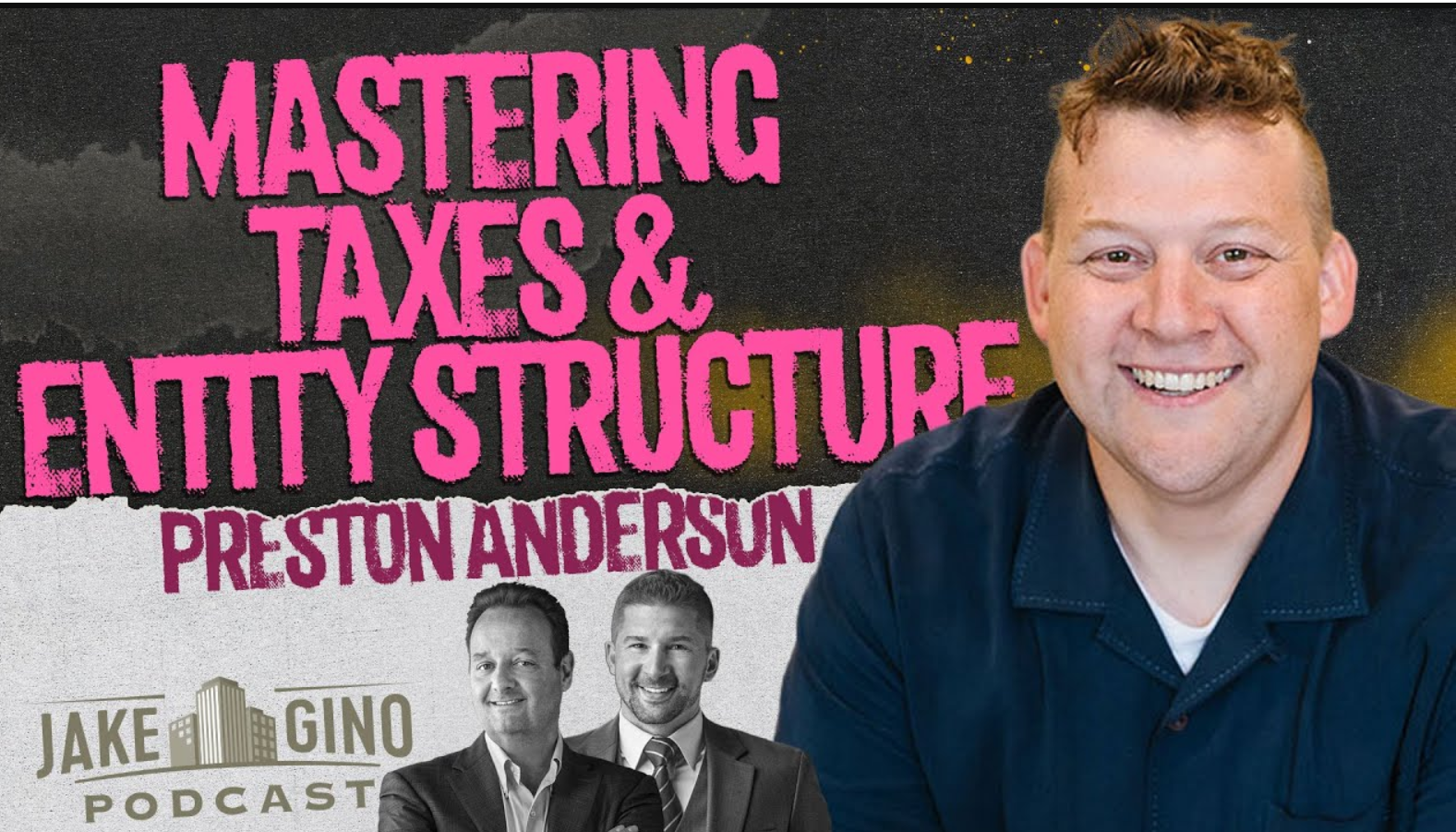
How to Save Money on Taxes as a Business Owner

Taxes are a major expense for any business owner. But there are ways to reduce your tax burden and keep more of your hard-earned money. In this article, we’ll discuss some of the strategies that Preston Anderson, a CPA, uses to help his clients save money on taxes.

Entity Structure

The way you structure your business can have a big impact on your taxes. Preston recommends that business owners carefully consider their entity structure. Here are some options to consider:

  • Sole Proprietorship: This is the simplest business structure, but it also offers the least liability protection. The business owner is personally liable for all business debts and obligations.
  • Limited Liability Company (LLC): LLCs offer personal liability protection for the business owner. This means that your personal assets are protected from business debts. LLCs can also be taxed as pass-through entities, which means that the business itself does not pay taxes. The profits and losses of the business pass through to the owner’s personal tax return.
  • S Corporation: S corporations can offer some tax advantages over LLCs. For example, S corporations can pay owners a reasonable salary, which can help to reduce payroll taxes. However, S corporations are subject to more complex regulations than LLCs.

Hiring Family Members

If you have children who are old enough to work, you can hire them to help with your business. This can be a great way to save money on taxes. You can pay your children up to a certain amount per year without having to withhold any taxes. The exact amount you can pay your children will depend on their age and the type of work they are doing.

Retirement Plans

One of the best ways to save money on taxes is to contribute to a retirement plan. There are a variety of retirement plans available for business owners, including SEP IRAs, SIMPLE IRAs, and solo 401(k)s. Contributions to these plans are tax-deductible, and the earnings on the money in the plan grow tax-free until you withdraw it in retirement.

Record Keeping

It’s important to keep good records of your business income and expenses. This will help you to ensure that you are taking advantage of all the tax deductions and credits that you are entitled to. It will also make it easier to file your tax return and avoid any potential audits.

Tax Mistakes to Avoid

  • Not Filing Your Taxes: This is the biggest mistake you can make. Even if you think you owe taxes, you should still file your return. The IRS will penalize you for not filing, and the penalties can be significant.
  • Filing on Schedule C: If you are a business owner, you should not file your business income and expenses on Schedule C of your personal tax return. Schedule C is for sole proprietors who have no employees. If you have employees, you should file Form 1120 (for C corporations) or Form 1120S (for S corporations).

By following these tips, you can save money on taxes and keep more of your profits. However, it’s important to note that this article is for informational purposes only and should not be considered tax advice. You should always consult with a tax professional to discuss your specific tax situation.

How To Lower Your Multifamily Insurance Premiums

The multifamily property market can be a goldmine for investors, but the rising cost of insurance can eat into your profits. In this article, we’ll unpack the secrets to lowering your multifamily insurance premiums, empowering you to make informed decisions and safeguard your investment.

Why are Multifamily Insurance Rates Rising?

The speaker in the YouTube video, Jake Gino, acknowledges a significant increase in multifamily insurance rates over the past few years. While the reasons aren’t entirely clear, some factors likely at play include:

  • Varying Market Risk: Insurance companies are more cautious in some areas than others. Areas with higher crime rates or natural disaster risks will see higher premiums.

  • Loss History: Properties with a history of claims, like fires or thefts, will be deemed riskier and come with steeper premiums.

  • Underwriting Standards: Insurance companies are tightening their underwriting standards, meaning they might be stricter about the condition and safety features of a property.

Strategies to Reduce Your Multifamily Insurance Premiums

Here are some valuable tips shared by Gino to bring down your multifamily insurance costs:

  • Be Property Selective: During acquisition, consider factors that influence insurance rates like location, crime rates, and the property’s history.

  • Maintain the Property: Address deferred maintenance issues and ensure the property meets safety codes. This demonstrates a lower risk to insurers.

  • Upgrade Wiring: Aluminum wiring might disqualify you from coverage or raise premiums. Consider upgrading to copper wiring.

  • Review Circuit Breakers: Outdated circuit breakers (Federal Pacific or Zinsco) may affect insurability. Replace them if necessary.

  • Shop Around: Don’t settle for the first quote! Get quotes from multiple qualified insurance brokers who specialize in multifamily properties.

  • Negotiate Deductibles: Consider a higher deductible to lower your premium. However, ensure you have the financial reserves to cover a deductible in case of a claim.

  • Review Policies Regularly: Review your policies annually to ensure proper coverage and avoid “expense creep,” where premiums silently increase over time.

  • Seek Professional Help: Consider working with a qualified insurance broker who can navigate the complexities of multifamily insurance and secure the best value for your needs.

Beyond the Basics: Other Considerations

The video also highlights some additional points to keep in mind:

  • Business Interruption Coverage: This protects your income if an event forces you to temporarily suspend operations.

  • Replacement Value: Ensure your coverage reflects the current cost to rebuild your property, not its depreciated value.

  • Flood Insurance: Be aware of flood risks and factor in potential flood insurance costs when considering a property.

The Takeaway

By understanding the factors affecting multifamily insurance rates and implementing these strategies, you can significantly reduce your premiums and make your investment more profitable. Remember, it’s not just about getting the cheapest rate; it’s about finding the right balance between cost and comprehensive coverage. So, be proactive, do your research, and don’t hesitate to seek professional guidance to navigate the world of multifamily insurance effectively.

How To Lower Your Multifamily Insurance Premiums

The multifamily property market can be a goldmine for investors, but the rising cost of insurance can eat into your profits. In this article, we’ll unpack the secrets to lowering your multifamily insurance premiums, empowering you to make informed decisions and safeguard your investment.

Why are Multifamily Insurance Rates Rising?

The speaker in the YouTube video, Jake Gino, acknowledges a significant increase in multifamily insurance rates over the past few years. While the reasons aren’t entirely clear, some factors likely at play include:

  • Varying Market Risk: Insurance companies are more cautious in some areas than others. Areas with higher crime rates or natural disaster risks will see higher premiums.

  • Loss History: Properties with a history of claims, like fires or thefts, will be deemed riskier and come with steeper premiums.

  • Underwriting Standards: Insurance companies are tightening their underwriting standards, meaning they might be stricter about the condition and safety features of a property.

Strategies to Reduce Your Multifamily Insurance Premiums

Here are some valuable tips shared by Gino to bring down your multifamily insurance costs:

  • Be Property Selective: During acquisition, consider factors that influence insurance rates like location, crime rates, and the property’s history.

  • Maintain the Property: Address deferred maintenance issues and ensure the property meets safety codes. This demonstrates a lower risk to insurers.

  • Upgrade Wiring: Aluminum wiring might disqualify you from coverage or raise premiums. Consider upgrading to copper wiring.

  • Review Circuit Breakers: Outdated circuit breakers (Federal Pacific or Zinsco) may affect insurability. Replace them if necessary.

  • Shop Around: Don’t settle for the first quote! Get quotes from multiple qualified insurance brokers who specialize in multifamily properties.

  • Negotiate Deductibles: Consider a higher deductible to lower your premium. However, ensure you have the financial reserves to cover a deductible in case of a claim.

  • Review Policies Regularly: Review your policies annually to ensure proper coverage and avoid “expense creep,” where premiums silently increase over time.

  • Seek Professional Help: Consider working with a qualified insurance broker who can navigate the complexities of multifamily insurance and secure the best value for your needs.

Beyond the Basics: Other Considerations

The video also highlights some additional points to keep in mind:

  • Business Interruption Coverage: This protects your income if an event forces you to temporarily suspend operations.

  • Replacement Value: Ensure your coverage reflects the current cost to rebuild your property, not its depreciated value.

  • Flood Insurance: Be aware of flood risks and factor in potential flood insurance costs when considering a property.

The Takeaway

By understanding the factors affecting multifamily insurance rates and implementing these strategies, you can significantly reduce your premiums and make your investment more profitable. Remember, it’s not just about getting the cheapest rate; it’s about finding the right balance between cost and comprehensive coverage. So, be proactive, do your research, and don’t hesitate to seek professional guidance to navigate the world of multifamily insurance effectively.

What Is a Cap Rate?

Ever wondered how real estate investors evaluate potential properties? They delve into a metric called the cap rate, a key indicator of an investment’s potential return. But what exactly is a cap rate, and why is it so important?

This article cuts through the jargon and explains the cap rate in a clear and concise way. We’ll explore what it is, how it’s calculated, and how investors use it to compare properties and make informed investment decisions. So, whether you’re a seasoned investor or just starting out, understanding the cap rate will empower you to navigate the exciting world of real estate.

Unveiling the Cap Rate: A Simple Formula, Big Impact

The cap rate, short for capitalization rate, is a straightforward formula that offers a quick glimpse into a property’s potential return on investment (ROI). It’s calculated by dividing a property’s net operating income (NOI) by its current market value.

Here’s the magic formula:

Cap Rate = Net Operating Income (NOI) / Market Value

Net Operating Income (NOI): This represents the income a property generates after subtracting all reasonable operating expenses. Think of it as the property’s annual profit from rent payments minus costs like property taxes, insurance, and maintenance.

Market Value: This is the current fair market value of the property, essentially what it would sell for in today’s market.

The Result: A Percentage Reflecting Potential Return

The cap rate, expressed as a percentage, reflects the potential annual return on your investment, excluding financing costs like mortgages. So, a cap rate of 8% suggests that the property might generate an annual return of 8% based on its current market value.

Why the Cap Rate Matters: Comparing Apples to Apples

While the cap rate offers a valuable snapshot of a property’s potential return, it’s important to remember it’s just one piece of the puzzle. Here’s why the cap rate is a crucial tool for real estate investors:

  • Standardization for Comparison: The cap rate allows you to compare different properties on a level playing field. Regardless of the property type (apartment building, office space, retail store), the cap rate provides a standardized metric to assess their potential returns.

  • Risk Assessment: Generally, a higher cap rate indicates a potentially higher return but also suggests a riskier investment. Properties with higher vacancy rates or located in less desirable areas might have higher cap rates to compensate for the increased risk.

  • Market Benchmarking: By analyzing cap rates of similar properties in a specific market, you can gauge whether a particular property is priced fairly. If a property’s cap rate deviates significantly from the market average, it might be a sign to dig deeper and understand the reason behind the discrepancy.

Remember, the cap rate is a starting point, not the final answer. It should be considered alongside other factors like property condition, location trends, and potential for future rent growth.

Beyond the Cap Rate: A Well-Rounded Approach

While the cap rate is a powerful tool, it doesn’t take into account all aspects of an investment. Here are some additional factors to consider for a well-rounded analysis:

  • Financing Costs: The cap rate doesn’t factor in mortgage payments or other financing costs. These expenses will affect your actual return on investment.

  • Future Expenses: Consider potential future expenses like capital improvements or major repairs that may not be reflected in current operating costs.

  • Market Conditions: The overall health and future prospects of the local real estate market can significantly impact the property’s long-term value.

By combining the cap rate with a comprehensive analysis of these additional factors, you’ll be well-equipped to make informed real estate investment decisions and navigate the path to building a strong property portfolio.

Real Estate Investing Outlook 2024

As we stand on the threshold of 2024, it’s an opportune moment to peer into the future and discern what lies ahead in the multifamily real estate market. While none of us possess a crystal ball for precise predictions, we can draw insights from past trends and analyze current indicators to make educated guesses. This article aims to provide an overview of what transpired in 2023, lessons learned, and projections for the year ahead.

Reflecting on 2023

The year 2023 brought both challenges and opportunities to the multifamily real estate sector. It was marked by a significant impact of variable-rate debt and syndicators finding themselves in precarious situations. Some investment groups had invested in rate caps to protect themselves, but as those rate caps expired, they were faced with higher interest rates. Additionally, taxes soared, insurance costs increased, payroll expenses rose due to inflation, and hiring became a challenge in certain markets. Consequently, rent growth decelerated considerably, dashing hopes for those who anticipated 20% year-over-year increases.

One noteworthy event was the disparity between the expectations and realities of 2023. For some, it was a turbulent year, while others thrived by adhering to a well-defined framework and principles. Amidst these challenges, certain strategies and practices allowed investors to navigate the storm successfully.

Navigating the Turbulence

The key to our success in 2023 lay in the deliberate actions taken in 2022 to prepare for what was to come. We focused on acquiring smaller deals, invested in land, and exercised caution in avoiding forced investments that didn’t align with our long-term goals. Staying true to the principles of buying right, financing right, and managing right allowed us to thrive. We closed more than 300 units and maintained our credibility in the market by staying consistent with our framework.

For investors eyeing 2024, it is crucial to define clear buying criteria, exercise caution with financing, and avoid chasing after opportunities that do not fit within their investment framework. Attempting to time the market is fraught with risks; hence, it is essential to have a well-thought-out plan in place.

Projections for 2024

Predictions for 2024 suggest that we are on the verge of witnessing peak completions, with approximately a million units under construction, the majority slated for delivery in the same year. This influx of supply is expected to impact rent growth, with an anticipated average vacancy rate of 5.7%. Markets with substantial construction activity, such as Nashville and Phoenix, may experience rent plateaus or even declines due to the surplus inventory.

In addition to the supply-demand dynamics, investors should prepare for rising taxes, increasing payroll costs, and labor market challenges in certain regions. Property values have declined by 13.4% since 2022, leading to a compression of cap rates by 60 basis points. The Federal Reserve has indicated the possibility of rate cuts in the coming year, aiming for a soft landing to prevent an economic downturn.

However, amidst these challenges, there remain opportunities in the multifamily real estate sector. Distressed debt situations could offer avenues for investors, as some sellers may decide to divest their assets due to declining property values and unfavorable interest rates.

A positive trend is the shift in demographics, favoring renting over homeownership. The average sales price of homes has risen, making renting a more affordable option in numerous markets. Landlords are increasingly offering attractive amenities, enhancing the appeal of renting. Furthermore, people’s desire for mobility and exploration before settling down continues to drive the rental market, offering opportunities for investors.

Actionable Steps for 2024

To seize opportunities in 2024, consider the following actionable steps:

  1. Educate Yourself: Start by gaining comprehensive knowledge of real estate investing principles.
  1. Partner Up: Collaborate with other investors to pool resources and acquire deals.
  1. Source Investors: Build relationships with potential investors who can provide the necessary capital.
  1. Connect with Lenders: Establish connections with community banks, credit unions, and mortgage brokers for insights and potential deals.
  1. Define Your Criteria: Develop a clear set of buying criteria aligned with your investment goals and market conditions. Stay disciplined and avoid pursuing unrealistic opportunities.
  1. Understand Financing: Familiarize yourself with various financing options, and evaluate them carefully in line with your investment strategy.
  1. Think Long-Term: Approach real estate investment with a long-term perspective, prepared for market cycles and changes. Build a sustainable investment strategy.

In conclusion, the multifamily real estate market in 2024 offers both challenges and opportunities. Building a strong foundation of knowledge, networking with potential partners and investors, and adhering to a disciplined approach will be the keys to success in the coming year. Remember that real estate investment is a journey, and with careful planning and execution, you can thrive in any market condition.

We wish you a successful and prosperous year in your real estate endeavors in 2024 and beyond.

Jake & Gino

Learn how to create passive income, build wealth, and take control of your destiny through multifamily real estate investing. Write to me at gino@jakeandgino,com to get a free copy of Wheelbarrow Profits book.


Understanding the Structure of a Multifamily Real Estate Syndication

Multifamily real estate syndication is a high-potential investment strategy that allows multiple investors to pool their resources to collectively purchase and manage apartment buildings. It provides an opportunity for passive investors to participate in real estate deals without the need for hands-on management. In this article, we will delve into the structure of a multifamily real estate syndication, outlining the process, roles, key terms, benefits, and addressing common FAQs.

Setting Up a Multifamily Real Estate Syndication

A. The Sponsor

– Key Player: The sponsor is the individual or entity responsible for identifying, acquiring, and managing the multifamily property. They often bring expertise, experience, and deal flow to the table.

– Responsibilities: Sponsors source deals, perform due diligence, secure financing, and oversee day-to-day property management.

B. The Legal Structure

– Entity Formation: The syndication typically involves forming a legal entity, such as an LLC, to hold the property. Investors become members or limited partners of this entity.

– Private Placement Memorandum (PPM): The PPM outlines the terms of the syndication, including the offering price, ownership structure, and the responsibilities and compensation of the sponsor.

C. Raising Capital

– Securities Regulations: Syndications must comply with securities regulations. This often means that the sponsor must work with legal and financial professionals.

– Investor Capital: Investors contribute funds to the syndication, typically in exchange for ownership shares. The minimum investment amount may vary.

D. Acquiring the Property

– Due Diligence: The sponsor conducts thorough due diligence to assess the property’s condition, financials, and potential returns.

– Financing: Financing for the property may involve a mix of debt and equity, with investors providing the equity portion.

Roles and Responsibilities of Partners

Limited Partners (LPs)

– Investors: LPs provide capital and have a passive role. They receive a share of the profits and are typically not involved in day-to-day management.

– Responsibilities: Their primary responsibility is to contribute capital and review periodic updates from the sponsor.

General Partners (GPs)

– Sponsor: GPs, often the same as the sponsor, are actively involved in the deal’s execution and management.

– Responsibilities: Sponsors handle all aspects of the investment, including property management, decision-making, and reporting to investors.

 Key Terms and Metrics Investors Should Know

Preferred Return

– Definition: The preferred return is the rate of return paid to investors before the sponsor receives their share of profits.

– Importance: It ensures that investors receive a minimum return on their investment before the sponsor profits.

Equity Split

– Definition: The equity split outlines how profits are divided between investors (LPs) and the sponsor (GP).

– Typical Split: Common splits are 70/30 or 80/20, with the majority going to investors.

Capitalization Rate (Cap Rate)

– Definition: The cap rate is a metric used to assess the property’s potential return. It’s the ratio of the property’s net operating income (NOI) to its current market value.

– Importance: A higher cap rate suggests a potentially higher return on investment.

Internal Rate of Return (IRR)

– Definition: IRR measures the total return on an investment over its holding period. It accounts for both the time value of money and cash flows.

– Importance: IRR provides a comprehensive view of the investment’s performance.

Benefits to Investors

– Diversification: Syndications enable investors to diversify their real estate portfolio without the need for extensive capital.

– Professional Management: Passive investors benefit from the expertise of the sponsor in acquiring, managing, and improving the property.

– Cash Flow and Appreciation: Investors can earn both ongoing rental income and potential property appreciation.

– Mitigated Risk: Sharing the risk with multiple investors can help reduce individual exposure.

Disbursal of Profits among Investors and General Partners

Profit Distribution

– Profits Defined: The profits from a multifamily real estate syndication can come from various sources, including rental income, property appreciation, and potential refinancing or sale of the property.

– Preferred Return: Investors, as LPs, typically receive their preferred return before profits are split. For example, if the preferred return is set at 8%, this means that LPs receive 8% of their initial investment before any profits are distributed to the GP.

– Equity Split: After the preferred return is met, profits are typically split based on the predetermined equity split, which outlines how profits are divided between LPs and the GP. Common splits are 70/30 or 80/20, with the majority going to investors.

Frequency of Distributions

– Distributions: Profit distributions are made periodically, often on a quarterly or annual basis. The exact frequency is outlined in the syndication’s legal documents.

– Reinvestment: Some syndications may allow investors to reinvest their profits into the property to compound their returns.

Taxes and Reporting

– Tax Implications: Investors should be aware of the tax implications of profit distributions, as they may be subject to taxes based on the income received.

– Reporting: The syndication’s sponsor typically provides investors with regular reports, including financial statements and tax documents, to ensure transparency.

Profit Reinvestment

– Business Strategy: The sponsor may choose to reinvest a portion of the profits into the property to fund improvements or expand the investment portfolio.

– Impact on Investors: Reinvestment can lead to potential property value appreciation, which benefits all investors in the long run.

Promote Structure

– Promote Defined: In some syndications, there may be a promote structure, where the sponsor (GP) receives an additional share of profits once a certain return threshold for investors is achieved. This encourages the sponsor to work towards higher returns.

– Alignment of Interests: The promote structure aligns the interests of investors and the sponsor, as both parties benefit from superior performance.

Waterfall Distribution

– Waterfall Distribution: This is a structured approach to profit distribution that outlines how profits are distributed in various scenarios. It ensures that LPs receive their preferred return and that the sponsor is rewarded for higher returns.

– Sequential Steps: In a typical waterfall distribution, profits are distributed in sequential steps, prioritizing the interests of LPs first and then the sponsor as specified in the legal documents.

Understanding how profits are disbursed among investors and general partners is a crucial aspect of participating in a multifamily real estate syndication. The legal structure and terms outlined in the syndication’s offering documents provide the framework for profit distribution, and investors should carefully review and understand these details to make informed investment decisions.

FAQs

Q1: How much control do investors have in the decision-making process?

A1: Typically, LPs have limited control and rely on the sponsor (GP) to make decisions regarding the property.

Q2: What is the typical duration of a syndication investment?

A2: Syndications may have holding periods ranging from 3 to 10 years or more, depending on the investment strategy.

Q3: Can I invest in a multifamily syndication with a small amount of capital?

A3: Yes, many syndications accept investments from a few thousand dollars to more substantial amounts.

Conclusion

Multifamily real estate syndication offers an attractive opportunity for investors to participate in real estate deals while benefiting from professional management and mitigated risk. Understanding the structure, key terms, and roles of a syndication is essential for making informed investment decisions in this growing real estate niche.

Financial Literacy for Millennials: Top 10 Actionable Tips

Financial literacy is a critical skill that everyone should possess, regardless of their age. However, for millennials, in particular, mastering financial literacy is essential. Born between 1981 and 1996, millennials have faced unique economic challenges, including student loan debt, the Great Recession, and now, the COVID-19 pandemic. To help this generation navigate their financial journey successfully, here are the top 10 actionable tips for improving financial literacy:

  1. Start with a Budget

Creating a budget is the foundation of good financial management. Begin by tracking your income and expenses. There are numerous apps and online tools available that can help simplify this process. By knowing where your money goes, you can make informed decisions about spending and saving.

  1. Build an Emergency Fund

An emergency fund is a financial cushion that can save you from financial stress in unexpected situations, like medical emergencies or job loss. Aim to save at least three to six months’ worth of living expenses in an easily accessible account.

  1. Understand Debt

Millennials often carry significant student loan and credit card debt. It’s crucial to understand the difference between “good” and “bad” debt. Good debt, like student loans for education, can lead to future earnings. Bad debt, such as high-interest credit card debt, can be detrimental to your financial health.

  1. Pay Off High-Interest Debt

If you have high-interest debt, focus on paying it off as soon as possible. Start with the debt that carries the highest interest rate, as this will save you the most money in the long run.

  1. Save for Retirement

Even though retirement may seem far away, it’s crucial to start saving early. Take advantage of employer-sponsored retirement plans like 401(k)s and consider opening an Individual Retirement Account (IRA) to supplement your savings.

  1. Invest Wisely

Learn about investment options and consider diversifying your portfolio to spread risk. You don’t need to be a Wall Street expert to invest successfully; many user-friendly investment platforms and robo-advisors are available.

  1. Educate Yourself

Stay informed about financial matters. Read books, take online courses, and follow reputable financial news sources. The more you know, the better equipped you’ll be to make sound financial decisions.

  1. Set Financial Goals

Having clear financial goals can provide motivation and direction for your financial journey. Whether it’s buying a home, starting a business, or traveling the world, outline your goals and create a plan to achieve them.

  1. Live Within Your Means

Avoid lifestyle inflation as your income grows. Instead, allocate additional income towards savings, investments, or paying down debt. Living within your means is a key component of financial stability.

  1. Seek Professional Advice

When you encounter complex financial situations, don’t hesitate to seek advice from professionals like financial planners or tax experts. They can provide guidance tailored to your specific needs and goals.

Let’s delve deeper into budgeting and savings models to provide you with practical insights on managing your finances effectively:

 Budgeting Models:

  1. Traditional Budgeting

This classic approach involves creating a detailed monthly budget where you list all sources of income and allocate specific amounts for various expense categories, such as housing, food, transportation, and entertainment. This model allows for a comprehensive overview of your finances.

  1. Envelope Budgeting

Envelope budgeting involves dividing your cash or virtual “envelopes” for different expense categories. Once an envelope is empty, you stop spending in that category for the month. This method promotes discipline and prevents overspending.

  1. Zero-Based Budgeting

With this model, every dollar of your income is allocated to a specific purpose, leaving no room for unassigned funds. The goal is to “zero out” your budget, meaning your income minus expenses equals zero. This approach encourages intentional spending and saving.

  1. 50/30/20 Budgeting

Popularized by Senator Elizabeth Warren, this model allocates 50% of your income to needs (e.g., housing, groceries), 30% to wants (e.g., dining out, entertainment), and 20% to savings and debt repayment. It provides a simple framework for balancing immediate desires with long-term financial goals.

 Savings Models:

  1. The 50/20/30 Rule for Saving

Incorporating savings into your budget is crucial. Allocate a minimum of 20% of your income to savings, debt repayment, and investments. This ensures that you’re building financial security and planning for the future while managing current expenses.

  1. Pay Yourself First

This model prioritizes savings by treating it as a non-negotiable expense. Before covering any other expenses, set aside a portion of your income for savings. You can automate this process through direct deposits into a savings account.

  1. Emergency Fund Model

Building an emergency fund is a vital savings goal. Start by saving three to six months’ worth of living expenses. You can use your tax refund, work bonuses, or windfalls to jumpstart this fund. Once it’s established, continue to contribute regularly.

  1. Sinking Fund Approach

A sinking fund is a savings account dedicated to specific, planned future expenses like vacations, car repairs, or home maintenance. Instead of being caught off guard, save gradually over time to cover these costs without affecting your budget significantly.

  1. The 1% Challenge

Begin by saving 1% of your income and gradually increase it by 1% each month until you reach a comfortable savings rate. This method makes savings a gradual and manageable part of your financial routine.

 A Combination Approach:

While these models offer different strategies for budgeting and saving, many individuals find success in combining aspects of multiple models to suit their unique financial situations and goals. The key is to find a system that resonates with you and provides the structure and discipline needed to achieve financial stability and growth.

Remember, the key to financial success is consistency. Continuously monitor and adjust your budget and savings plan as your financial circumstances change. Over time, you’ll build financial resilience and work toward achieving your short-term and long-term financial objectives.

Bridge Financing for Multifamily Real Estate Investing: A Comprehensive Guide

Real estate investors often find themselves in situations where they need to secure financing quickly to capitalize on a promising investment opportunity or address a short-term funding gap. In such scenarios, bridge financing can be a valuable tool, especially for multifamily real estate investments. This comprehensive guide will explore what bridge financing is, how it works, its benefits and drawbacks, and how to use it effectively in the multifamily real estate sector.

Understanding Bridge Financing

Bridge financing, sometimes referred to as a bridge loan or interim financing, is a short-term loan designed to bridge the gap between the acquisition or renovation of a property and its eventual long-term financing solution, such as a traditional mortgage or refinancing. It acts as a financial bridge, providing access to funds for investors while they secure more permanent and stable financing.

How Bridge Financing Works

Bridge financing is typically used for a variety of real estate scenarios, including:

  1. Property Acquisition: Investors may use bridge loans to acquire multifamily properties quickly, especially when facing competitive markets or auction situations.
  1. Property Renovation: It’s common for investors to use bridge financing to fund renovations or improvements that will increase the property’s value. Once the property is improved, it can often secure long-term financing at a higher valuation.
  1. Property Repositioning: Bridge loans can be employed to reposition underperforming multifamily properties. Investors may use the funds to make necessary changes to attract higher-paying tenants or increase occupancy rates.
  1. Short-Term Cash Flow Needs: In some cases, investors may need bridge financing to cover short-term cash flow gaps or unexpected expenses while waiting for other sources of capital.

Benefits of Bridge Financing in Multifamily Real Estate

  1. Speed and Flexibility

Bridge loans are known for their quick approval and funding timelines, which can be crucial in competitive real estate markets. This speed allows investors to secure properties or initiate improvements promptly.

  1. Property Enhancement

Investors can use bridge financing to make necessary improvements or upgrades that can significantly increase the property’s value, making it more attractive for long-term financing.

  1. Short-Term Financial Relief

Bridge loans provide short-term relief for cash flow issues or unexpected expenses, preventing investors from facing financial constraints that could disrupt their multifamily investment strategies.

  1. Seizing Investment Opportunities

Bridge financing allows investors to seize time-sensitive investment opportunities, such as acquiring distressed multifamily properties or participating in auctions.

Drawbacks and Risks

While bridge financing offers numerous advantages, it’s essential to be aware of the potential drawbacks and risks associated with these loans:

  1. Higher Interest Rates: Bridge loans typically come with higher interest rates than traditional mortgages, increasing the overall cost of financing.
  1. Short-Term Nature: Bridge financing is designed for the short term, often with terms ranging from a few months to a few years. Investors must have a clear exit strategy for repaying the loan.
  1. Limited LTV Ratios: Lenders may provide bridge loans with lower loan-to-value (LTV) ratios, requiring investors to bring more of their funds to the table.
  1. Default Risk: If an investor fails to secure long-term financing or meet the bridge loan’s terms, they risk defaulting on the loan, which could lead to foreclosure.

How to Use Bridge Financing Effectively in Multifamily Real Estate

  1. Plan Your Exit Strategy: Before securing a bridge loan, have a well-defined plan for repaying it. This could include securing long-term financing, selling the property, or other exit strategies.
  1. Due Diligence: Conduct thorough due diligence on the property, its market, and your financing options. Ensure the potential returns justify the cost of bridge financing.
  1. Consult with Experts: Seek advice from real estate professionals, financial advisors, and lenders experienced in bridge financing for multifamily properties to make informed decisions.
  1. Negotiate Favorable Terms: Negotiate the terms of your bridge loan to ensure they align with your investment goals. Pay attention to interest rates, fees, and prepayment penalties.
  1. Use Bridge Financing Sparingly: While bridge financing can be advantageous, it’s best used for short-term needs and opportunities rather than as a long-term financing solution.

Conclusion

Bridge financing is a valuable tool in the toolkit of multifamily real estate investors. When used strategically, it can facilitate property acquisition, renovation, and repositioning while offering short-term financial relief. However, investors must be aware of the associated costs and risks and have a clear exit strategy in place. Ultimately, successful utilization of bridge financing can help investors seize opportunities and optimize their multifamily real estate investments.